

Home › Treatments › Dermapen Microneedling
Dermapen Microneedling at AARVA
Smoother texture and softer scars, lines and stretch marks, usually back at work within a day or two
About Dermapen Microneedling
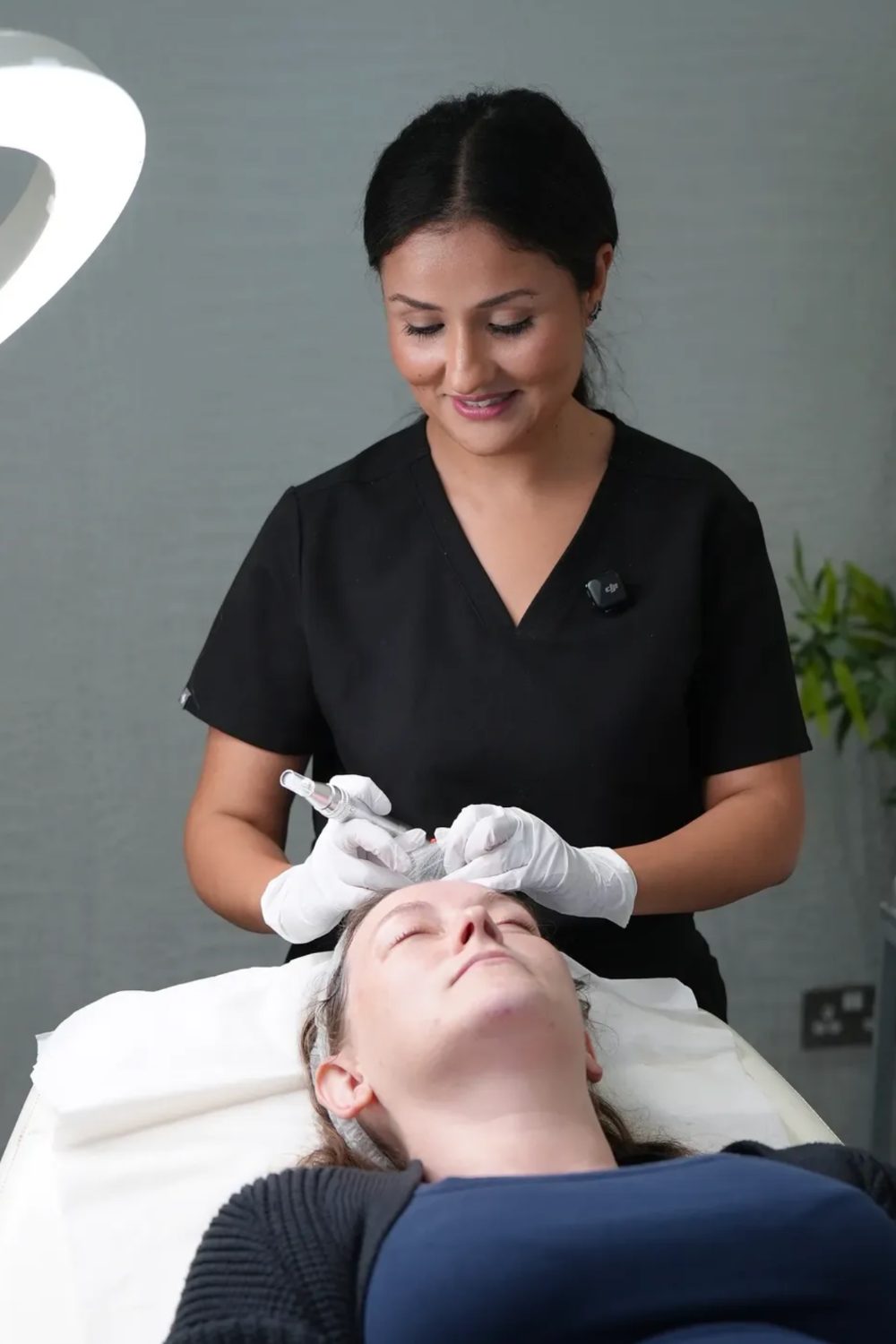
Dermapen microneedling is a collagen induction treatment that uses a medical-grade pen with a cartridge of very fine needles to create thousands of tiny, controlled channels in the skin. As the skin repairs those channels, it lays down new collagen and elastin, which can soften acne scars, fine lines, enlarged pores and uneven texture, and stretch marks and scars on the body. On the scalp, it is also used as part of a plan for thinning hair. The needle depth can be adjusted up to 3 mm, so we can work gently around the eyes and more deeply over established scarring.
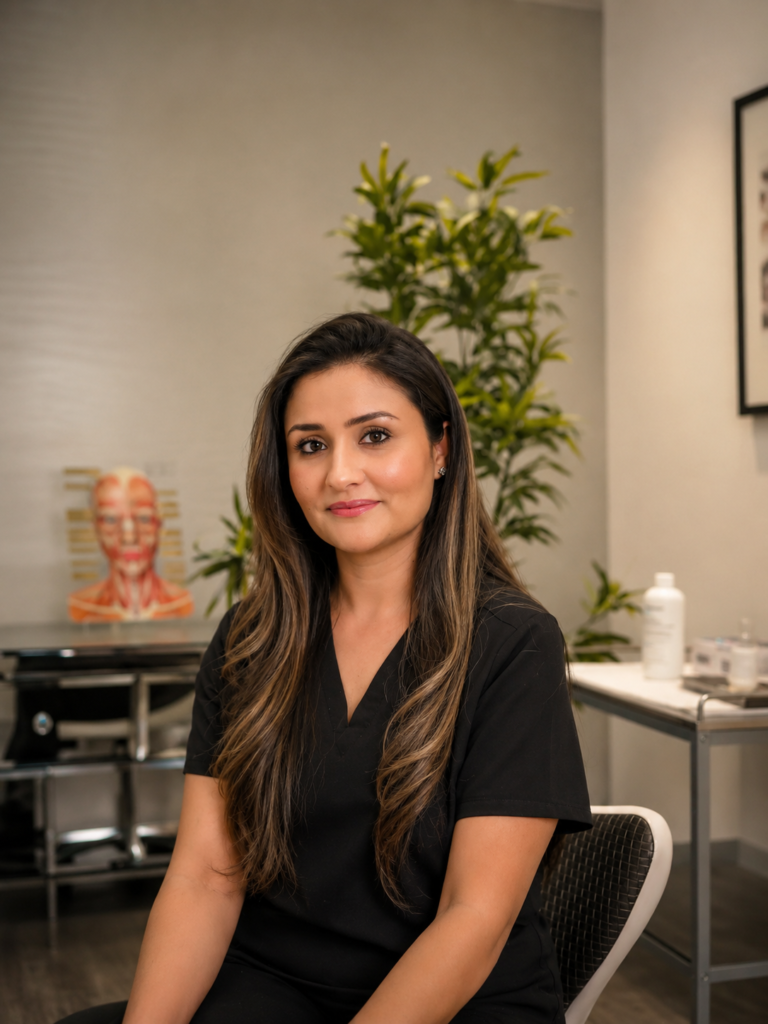
Dermapen microneedling at Aarva is planned by Dr Shivani Malhotra, a practising GP who leads our skin and regenerative medicine, and delivered in our practice on Midland Drive, Royal Sutton Coldfield. Scarring, stretch marks and thinning hair often have a medical story behind them, from hormones to iron levels, so a doctor looks at your health history as well as your skin before anything is recommended. You leave your consultation with a written treatment plan with clear pricing.
“Microneedling looks simple, which is why technique matters. The depth, the spacing and what goes on your skin afterwards make most of the difference.”
Is Dermapen Microneedling Right for You?
Likely a good fit if you:
- have acne scars, enlarged pores, rough texture, fine lines, stretch marks or surgical scars
- want steady improvement with only a day or two of redness
- are happy to build results over a course of three to six sessions
Probably not the right first step if you:
- have active, inflamed acne, where treating the breakouts comes first
- are pregnant, have a skin infection or cold sore in the area, or tend to form raised (keloid) scars
- have deep scarring and can allow a week of recovery, where UltraClear may do more in fewer sessions
Not sure which side you are on? That is exactly what the consultation is for.
Dermapen Microneedling Before and After
Real Aarva patients, photographed in the same light and at the same angle, three months after their last session. No filters, no retouching.
FACE · PATIENT A
FACE · PATIENT B
FACE · PATIENT A
FACE · PATIENT B
FACE · PATIENT A
FACE · PATIENT B
Every patient is different. These images show what happened for them, not a promise of what will happen for you. Shared with each patient’s written consent.
Our Promise to You
The standards every Aarva patient can expect, whatever they come in for.
- You see a doctor before any treatment is planned.
- You get a written treatment plan to take away, with clear pricing, so you can go ahead on the day or decide in your own time.
- We will tell you if microneedling will not help, even if that means no treatment at all.
- If something does not feel right afterwards, a doctor sees you.
- Your consultation is time with a doctor, set aside just for you.
From First Conversation to Follow-Up
Four simple steps, with the same doctor-led care from your first message to your follow-up.
Tell us what is bothering you
Request an appointment online or get in touch, and let us know whether it is your face, your body or your scalp.
See a doctor from the start
A GP takes your history, examines the area in good light and explains what a course of microneedling can realistically change. You leave with a written treatment plan with clear pricing.
Your treatment
The area is cleansed and numbed, then treated at the depths agreed in your plan. It takes 45 to 60 minutes including numbing, and feels like light scratching or vibration rather than pain.
We follow you up
Written aftercare, the right products and a named person to call. Sessions are usually four to six weeks apart, and we review you at each one against your starting photographs.
Why a Doctor Plans Your Microneedling
Dermapen microneedling at Aarva is planned by Dr Shivani Malhotra, GP, who leads skin and regenerative medicine. Every treatment is planned and overseen by a doctor.
The pen moves the needles up and down very quickly, and we set the depth area by area. On the face, shallow depths suit dullness, pores and fine lines, and deeper passes suit rolling and boxcar acne scars. On the body, we treat stretch marks, surgical scars and crepey skin on the stomach, thighs, arms and chest, where the skin is thicker and courses tend to be longer. Stretch marks tend to respond better while they are still pink or red than once they have faded to white. On the scalp, microneedling is used for some types of thinning hair, often alongside PRP. Hair loss has many causes, including iron deficiency, thyroid problems and hormonal change, so as GPs we check for those first and can arrange blood tests where needed.
Microneedling combines well with other treatments. PRP or polynucleotides can be applied straight after treatment, while the channels are open. For pigmentation or a stubborn texture problem, a course of chemical peels may sit alongside it, and for broader skin quality LaserMe may be the better choice. If it is, we will say so.
Why Patients Choose Aarva
Doctor-led from the first appointment
Every consultation is with a doctor, and every plan is written by a practising GP.
GPs still in practice
Our doctors, Dr Saptarshi Saha, Dr Purti Choudhary and Dr Shivani Malhotra, are GMC-registered GPs who still work in general practice.
One medical record
GP, skin and women’s health care sit on one record, so nothing gets lost between appointments.
It starts with a consultation
A doctor assesses you properly, explains your options and gives you a written treatment plan with clear pricing, so every step that follows is the right one.
Questions Patients Ask About Dermapen Microneedling
Cannot see your question? Our doctors are happy to talk it through at your consultation.
The pen creates thousands of tiny channels in the skin. Each one is a controlled micro-injury that the skin repairs, and in doing so it produces new collagen and elastin. Over a course of sessions, that can show as smoother texture, softer scars and firmer skin. The channels close within hours, so the surface heals quickly.
It is used for acne scars, enlarged pores, rough texture, fine lines, crepey skin, stretch marks and surgical scars, on the face, neck, chest and body. On the scalp, it is used as part of a plan for some types of thinning hair, usually with PRP.
It is a good option if you want gradual change with only a short recovery. It is not suitable during pregnancy, with active inflamed acne, a skin infection or cold sore in the area, or if you tend to form raised (keloid) scars. If you have taken oral acne medication in the last six months, take medicines that thin the blood, or have a condition that affects healing, we discuss it at consultation.
Usually, with some care. Because microneedling does not rely on heat or light, it can usually be used across a wide range of skin tones. There is still a small risk of temporary darkening, so we adjust depth and aftercare for your skin and may suggest preparing the skin first.
Redness, a sunburn-like feeling, mild swelling and some dryness or flaking are expected for one to three days. Tiny pinpoint bleeding during treatment is normal. Less commonly, there can be bruising, breakouts, a flare of cold sores or temporary darkening. Infection and scarring are rare.
We apply numbing cream first. After that, most people describe a buzzing, scratchy sensation that is uncomfortable in places but tolerable. Bony areas such as the forehead and jawline, and deeper passes over scars, feel more intense.
Expect one to three days of redness, similar to mild sunburn, and a few days of dry skin. Most people return to work within a day or two. Avoid make-up for 24 hours, and exercise, swimming and saunas for 48 hours. Wear SPF 50 every day throughout your course.
Usually three to six, four to six weeks apart. Acne scars and stretch marks often need the upper end of that range. After that, a top-up session once or twice a year is often enough to hold the improvement.
Most people notice fresher, smoother skin a week or so after each session. Scars and stretch marks change more slowly, and we judge the full result about three months after your final session, once the new collagen has had time to settle.
Neither is better for everyone. Microneedling has shorter downtime and can suit a wider range of skin tones. A resurfacing laser such as UltraClear can often make a bigger change in fewer sessions, with more recovery. Some people benefit from both, for example laser for the deepest scars and microneedling to refine the rest.
It can help some people with pattern hair thinning, particularly alongside PRP or prescription treatment where appropriate, after consultation. It does not help every type of hair loss, which is why we look for the cause first.
Dermapen microneedling is available at Aarva on Midland Drive, Royal Sutton Coldfield, a short drive from Four Oaks, Walmley, Erdington, Lichfield, Tamworth and north Birmingham. Parking is available nearby.
Dermapen microneedling at Aarva is priced individually, with course pricing where it helps. PRP or polynucleotides added in the same visit are priced separately. Your written plan shows the total cost of the course before you agree to anything. Microneedling also earns points in the Aarva Circle.
Come With the Problem, Not the Treatment
You do not need to know whether microneedling, laser or something else is the answer. Tell a doctor what is bothering you, and you will leave with an honest view of what will help, and what will not.
Conditions we treat with Dermapen Microneedling: Fine lines and wrinkles · Acne scarring · Loose skin, stretch marks and scarring · Hair thinning and hair loss · Dull, uneven skin and enlarged pores
Related treatments: PRP · Polynucleotides · LaserMe · Chemical peels