

Home › Treatments › Chemical Peels
Chemical Peels at AARVA
Clearer, brighter, more even skin, with the strength of each peel matched to your skin
About Chemical Peels
A medical-grade chemical peel uses a carefully chosen blend of acids to remove damaged surface cells, unclog pores and prompt the skin to renew itself. Depending on the acids and strength, peels can help calm acne and breakouts, fade sun spots and uneven pigmentation, support a melasma plan, refine dull, uneven skin and enlarged pores, and soften shallow acne scarring. Most of the peels we use are superficial, with little or no peeling, and a smaller number are medium-depth for more established concerns.
Chemical peels at Aarva are planned by Dr Shivani Malhotra, a practising GP who leads our skin and regenerative medicine, and delivered in our practice on Midland Drive, Royal Sutton Coldfield. Choosing a peel is a medical decision, because the wrong acid at the wrong strength can irritate the skin or leave dark marks, especially in darker skin tones. A doctor looks at your skin, your history and the medicines you take before anything is recommended. You leave your consultation with a written treatment plan with clear pricing.
“A good peel is chosen for your skin, not for how strong it is. A gentler peel done well usually does more than one aggressive one.”
Are Chemical Peels Right for You?
Likely a good fit if you:
- have breakouts, blackheads, dullness, sun spots, uneven tone or enlarged pores
- want steady improvement with little time off
- are happy to use the right skincare and daily sun protection alongside your peels
Probably not the right first step if you:
- are pregnant or breastfeeding, when only a few gentle options are suitable
- have taken oral acne medication in the last six months, or have active cold sores or broken skin
- have deep acne scars, where UltraClear or microneedling may do more
Not sure which side you are on? That is exactly what the consultation is for.
Chemical Peels Before and After
Real Aarva patients, photographed in the same light and at the same angle, three months after their last session. No filters, no retouching.
FACE · PATIENT A
FACE · PATIENT B
FACE · PATIENT A
FACE · PATIENT B
FACE · PATIENT A
FACE · PATIENT B
Every patient is different. These images show what happened for them, not a promise of what will happen for you. Shared with each patient’s written consent.
Our Promise to You
The standards every Aarva patient can expect, whatever they come in for.
- You see a doctor before any treatment is planned.
- You get a written treatment plan to take away, with clear pricing, so you can go ahead on the day or decide in your own time.
- We will tell you if a chemical peel will not help, even if that means no treatment at all.
- If something does not feel right afterwards, a doctor sees you.
- Your consultation is time with a doctor, set aside just for you.
From First Conversation to Follow-Up
Four simple steps, with the same doctor-led care from your first message to your follow-up.
Tell us what is bothering you
Request an appointment online or get in touch. You can describe it in a sentence, or save it for the room.
See a doctor from the start
A GP takes your history, examines your skin in good light and explains which peel could help and why. You leave with a written treatment plan with clear pricing.
Your treatment
Your skin may be prepared with home skincare for two to four weeks first. On the day, the peel is applied, timed and neutralised or removed in 30 to 45 minutes. It tingles or feels warm rather than painful.
We follow you up
Written aftercare, the right products and a named person to call. Peels are usually two to four weeks apart, and we review your skin at each one against your starting photographs.
Why a Doctor Plans Your Chemical Peel
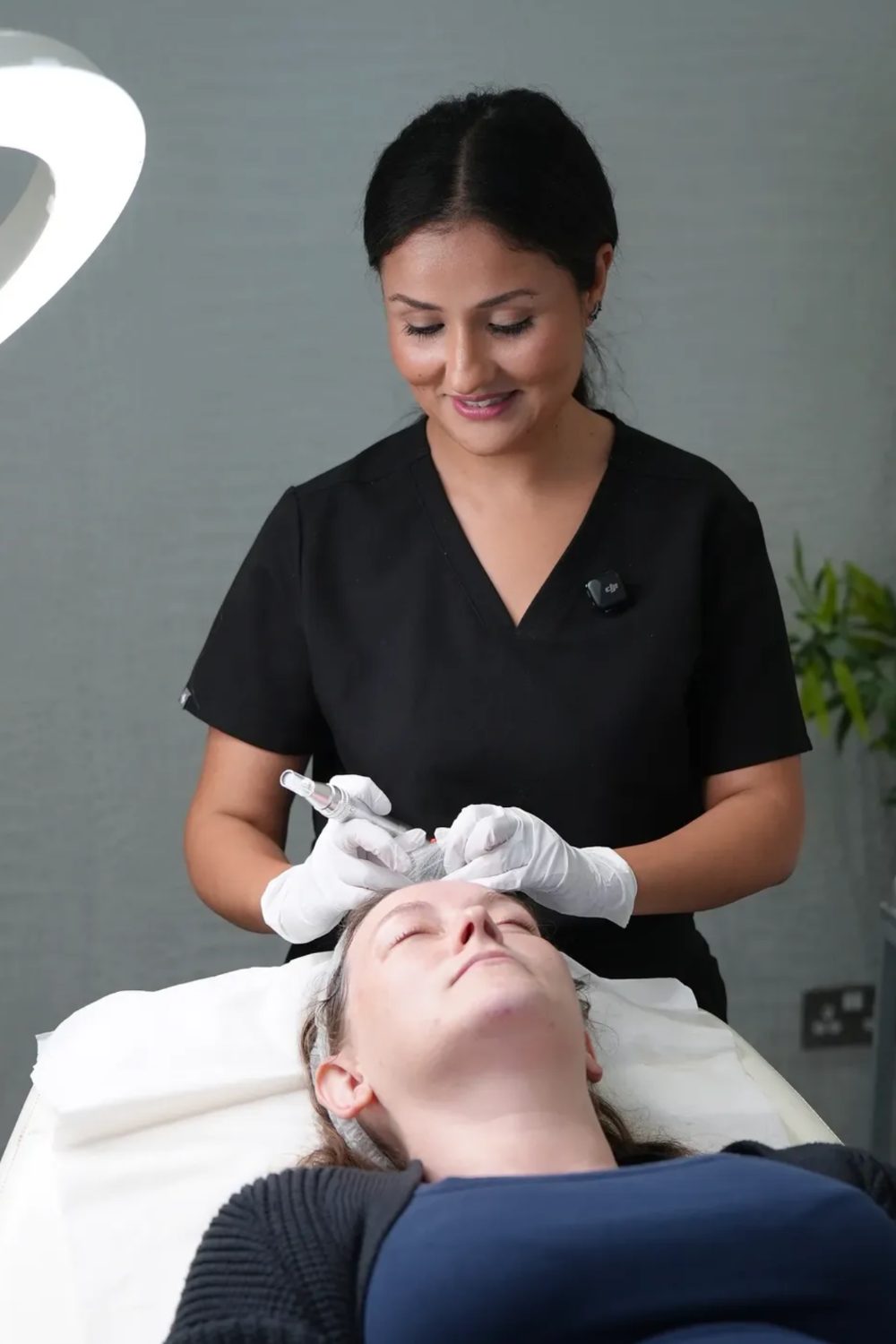
Chemical peels at Aarva are planned by Dr Shivani Malhotra, GP, who leads skin and regenerative medicine. Every treatment is planned and overseen by a doctor.
Superficial peels work on the outermost layer of the skin, using acids such as glycolic, lactic, mandelic, salicylic or azelaic acid. They suit acne, dullness, mild pigmentation and a first peel, with little or no visible peeling. Medium-depth peels reach a little deeper and suit more established pigmentation, sun damage and shallow scarring, with about a week of peeling. Deep peels need a much longer recovery and are not something we offer. Mesoestetic peels form a core part of our range. Their professional mesopeel line includes peels designed for acne-prone and oily skin, a modified Jessner peel for texture and pigmentation, and depigmenting peels used within a melasma plan.
For darker skin tones, we choose gentler acids, prepare the skin beforehand and build strength slowly, because irritation can cause temporary darkening. Peels combine well with other treatments. Cosmelan may come first for melasma, medical-grade skincare keeps results going between sessions, an iS Clinical Fire & Ice facial suits skin that wants a gentler refresh, and LaserMe can follow for texture and fine lines.
Why Patients Choose Aarva
Doctor-led from the first appointment
Every consultation is with a doctor, and every plan is written by a practising GP.
GPs still in practice
Our doctors, Dr Saptarshi Saha, Dr Purti Choudhary and Dr Shivani Malhotra, are GMC-registered GPs who still work in general practice.
One medical record
GP, skin and women’s health care sit on one record, so nothing gets lost between appointments.
It starts with a consultation
A doctor assesses you properly, explains your options and gives you a written treatment plan with clear pricing, so every step that follows is the right one.
Questions Patients Ask About Chemical Peels
Cannot see your question? Our doctors are happy to talk it through at your consultation.
The acids in a peel loosen the bonds between dead and damaged surface cells so they shed more quickly. That clears blocked pores, lifts some surface pigment and prompts the skin to renew itself. Deeper peels also encourage some new collagen, which can soften fine lines and shallow scarring.
Peels are used for acne, blackheads and oily skin, dullness, sun spots, uneven tone, melasma as part of a wider plan, enlarged pores, fine lines and shallow acne scarring. They can be used on the face, neck, chest and back.
Peels suit many people who want clearer, brighter skin with little downtime. They are not suitable with active cold sores, broken or sunburnt skin, or within six months of oral acne medication, and only a few gentle options are used in pregnancy. If you use prescription or active skincare, we tell you which products to stop and for how long beforehand.
Yes, as long as the peel is chosen with care. Superficial peels using acids such as mandelic, lactic, salicylic or azelaic acid are often well tolerated in darker skin. Stronger peels carry a higher risk of temporary darkening, so we prepare the skin first and may suggest a test patch.
Tingling, warmth and redness are expected during and after a peel. Dryness and flaking can follow for a few days, or peeling for about a week after a medium peel. Temporary darkening, a cold sore flare or irritation can happen but are less common. Scarring is rare.
Most people feel tingling, warmth or stinging for a few minutes, which we manage with a cooling fan and careful timing. Medium peels feel more intense but are short.
After a superficial peel, most people have a little redness and some flaking for up to three days and can return to work the same day. After a medium peel, plan for five to seven days of visible peeling. Wear SPF 50 every day and avoid picking the skin.
Superficial peels usually work as a course of three to six, two to four weeks apart. Medium peels are often done once or twice, several weeks apart. Your written plan sets this out before you start.
Skin usually looks brighter and smoother within a week of a peel. Changes to acne, pigmentation and texture build across the course and are reviewed a few weeks after your final session.
A chemical peel exfoliates the skin to improve a range of concerns. Cosmelan is a specific depigmentation treatment, with an in-practice mask and home maintenance, designed for melasma and stubborn pigmentation. Some plans use Cosmelan first and peels later to maintain the result.
Chemical peels are available at Aarva on Midland Drive, Royal Sutton Coldfield, a short drive from Four Oaks, Walmley, Erdington, Lichfield, Tamworth and north Birmingham. Parking is available nearby.
The price of a chemical peel at Aarva is set at your consultation, with course pricing available. It depends on the peel, the area and the number of sessions, and you receive it in writing before you commit. Peels also earn points in the Aarva Circle.
Come With the Problem, Not the Treatment
You do not need to know which peel, if any, is the answer. Tell a doctor what is bothering you, and you will leave with an honest view of what will help, and what will not.
Conditions we treat with Chemical Peels: Melasma · Pigmentation and sun damage · Acne scarring · Acne and breakouts · Dull, uneven skin and enlarged pores
Related treatments: Cosmelan · iS Clinical Fire & Ice · Medical-grade skincare · LaserMe