

Home › Conditions › Acne and breakouts
Acne and breakouts
Acne is a common skin condition that causes spots, blackheads and sometimes painful lumps. It can usually be controlled well with the right treatment, given time. We start by looking for what is driving your breakouts, hormones included, and plan treatment from there.
Understanding Acne and Breakouts
Acne happens when hair follicles become blocked with oil and dead skin, leading to blackheads, whiteheads, red spots and, in more severe cases, deep nodules or cysts. It mostly affects the face, chest and back. Although it is often linked with teenage years, adult acne is common, particularly in women, and often shows as jawline acne or breakouts around the chin.
Acne that keeps coming back is worth a doctor’s view, especially when it starts in adulthood. We see adults from Sutton Coldfield and across north Birmingham, and acne care is part of our medical-grade skin service.
What Causes Acne?
Acne develops when the oil glands in the skin respond to hormones by producing more oil. Blocked pores and bacteria on the skin then lead to inflammation. Common factors include:
- Hormones: changes around periods, pregnancy and some types of contraception can trigger breakouts.
- Polycystic ovary syndrome (PCOS): a hormone condition that can cause acne alongside irregular periods and excess hair growth.
- Family history: acne often runs in families.
- Some medicines: certain medicines, including some steroids, can bring on spots.
Acne is not caused by poor hygiene, and washing more often will not clear it.
How We Assess Acne at Aarva
A doctor looks at the type and severity of your acne, where it appears and whether it is leaving marks or scars. We ask about your periods, contraception, medicines and what you have tried.
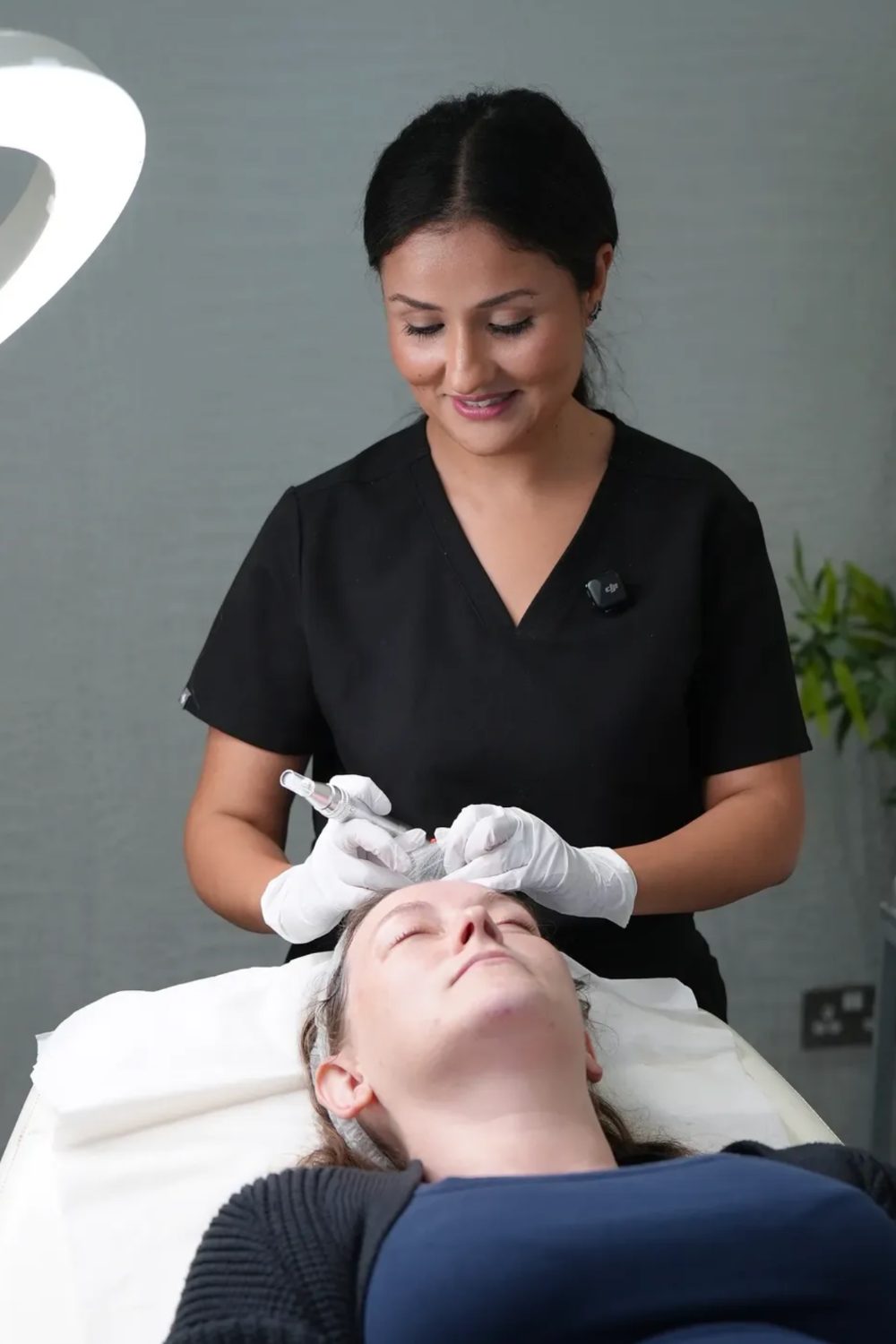
If your acne seems hormonal, for example if it started in adulthood or comes with irregular periods or extra hair growth, we may suggest blood tests. Our women’s health doctors can then look at the hormonal side, with everything kept on the same medical record. At your skin consultation, Aura 3D skin analysis helps us record your skin at the start, so progress is easier to judge.
Treatment Options for Acne
Your plan depends on the type and severity of your acne and what is driving it. It often combines clinic treatments with a home routine, and medical treatment where needed.
Peels help clear blocked pores, reduce blackheads and fade marks left by spots. They can help mild to moderate acne alongside a home routine, though the evidence is weaker than for prescribed creams, and they are not enough on their own for severe acne.
An in-clinic resurfacing facial that exfoliates and helps with congestion and dull, uneven skin. It suits milder breakouts and is often used between other treatments.
A simple daily routine to unclog pores and calm inflammation, with prescription creams where appropriate, after consultation. For more severe acne we may discuss other prescription treatment.
Use a gentle cleanser, non-comedogenic moisturiser and daily sunscreen. Try not to pick or squeeze spots, as this can lead to scarring.
What to Expect
What to expect depends on the treatment chosen, the settings used and the outcomes you agree with your doctor in your plan.
Most treatments need several weeks, often two to three months, before you see a clear improvement, and skin can sometimes feel drier or more irritated at first.
Peels and facials usually involve little downtime, with some redness or flaking for a day or two. Acne can flare again, so once your skin is clearer, we agree a routine to keep it under control.
How We Approach Acne at Aarva
We look for the cause of your acne rather than just treating the spots. For many adults, hormones play a big part, and because our GP, women’s health and skin services share one medical record, we can look at the whole picture without sending you elsewhere.
Treatment should match how bad the acne is. Some people need a clinic treatment and a better routine; others need medical treatment first. We give you a written treatment plan to take home, with clear pricing, and if you do not need a treatment, we will tell you.
When to See a Doctor Sooner
See your GP if your acne is severe, with painful nodules or cysts, or if it is leaving scars, as early treatment can help limit scarring. Also see a doctor if acne appears suddenly in adulthood together with irregular or missed periods, excess facial or body hair, or other hormonal changes. If acne is affecting your mood, confidence or relationships, speak to your GP. If you feel very low or have thoughts of harming yourself, contact your GP urgently, call 111, or call 999 in an emergency.
This list is not exhaustive. If you are not sure about something, see a doctor.
Questions Patients Ask About Acne and Breakouts
Cannot see your question? Our doctors are happy to talk it through at your consultation.
Adult acne is common, especially in women, and is often linked to hormones, contraception, stress or skincare. A doctor can check for causes such as PCOS.
Hormonal acne often appears on the jawline and chin and flares around periods. Irregular periods or excess hair can point to an underlying hormone condition, which blood tests can help check.
Peels and clinical facials can help mild to moderate acne and blackheads, particularly with a good home routine. More severe acne usually needs medical treatment too.
Most treatments take several weeks, often two to three months, to show a clear improvement.
The cost depends on the plan agreed at your consultation. We confirm the price in writing before any treatment starts.
Why Patients Choose Aarva
Doctor-led from the first appointment
Every consultation is with a doctor, and every plan is written by a practising GP.
GPs still in practice
Our doctors, Dr Saptarshi Saha, Dr Purti Choudhary and Dr Shivani Malhotra, are GMC-registered GPs who still work in general practice.
One medical record
GP, skin and women’s health care sit on one record, so nothing gets lost between appointments.
It starts with a consultation
A doctor assesses you properly, explains your options and gives you a written treatment plan with clear pricing, so every step that follows is the right one.
Come to Us With a Problem, Not a Treatment
If breakouts are getting you down, book a consultation with one of our doctors, or try Find your starting point first.
Related conditions: Melasma · Pigmentation and sun damage · Dull, uneven skin and enlarged pores · Under-eye hollows and dark circles
This page is general information and does not replace a consultation with a doctor.