

Home › Conditions › Loose skin, stretch marks and scarring
Loose skin, stretch marks and scarring
Loose skin, stretch marks and scarring are common after pregnancy, weight loss, growth spurts or surgery. Non-surgical treatment can soften and fade stretch marks and scars and firm mildly loose skin, but it will not make them disappear. At Aarva a doctor assesses your skin first and tells you honestly what is realistic, including when surgery would be the better route.
Understanding Loose Skin, Stretch Marks and Scarring
Stretch marks (striae) are narrow streaks that appear when skin stretches faster than it can adapt. They often start red, purple or dark brown and slowly fade to pale, silvery lines, usually on the tummy, hips, thighs, breasts or upper arms. Loose skin after weight loss or pregnancy often shows as folds across the tummy, and scars can stay raised, indented or a different colour.
These changes are not harmful, but they can affect how you feel in clothes or swimwear. Our Sutton Coldfield clinic is doctor-led, and body skin care sits within our regenerative medicine service, on the same medical record as the rest of your care. Patients come from across north Birmingham.
What Causes Stretch Marks and Loose Skin?
When skin stretches quickly, or its collagen and elastic fibres weaken with age, the deeper layer can tear slightly or lose its spring. Common triggers include:
- Pregnancy: stretch marks after pregnancy are very common and often appear in the later months
- Rapid weight gain, or significant weight loss that leaves loose skin behind
- Growth spurts during puberty
- Long-term use of steroid medicines, including strong steroid creams
- Family history
- Surgery, injury, burns or acne, which can leave body scars
Rarely, new stretch marks are a sign of a hormonal condition such as Cushing’s syndrome, which is why we ask about your wider health.
How We Assess Stretch Marks and Scarring at Aarva
You see a doctor first. We ask about weight change, pregnancies, medicines and general health, then examine the areas that concern you. A surgical scar keeps changing for a year or more, so we think carefully about timing and may suggest waiting before treating a recent one.
For loose skin, we check how much there is and how firm it feels. Mild laxity can respond to non-surgical treatment. Larger amounts of overhanging tummy skin usually will not, and we will say so plainly and discuss a surgical opinion instead.
Treatment Options for Stretch Marks, Loose Skin and Scars
Your plan depends on what we find at assessment. It often combines treatments in stages, set out at your consultation.
Uses controlled heat to encourage collagen and firm mildly loose skin on the tummy, arms or thighs. The effect is modest and is no substitute for surgery where there is a lot of excess skin.
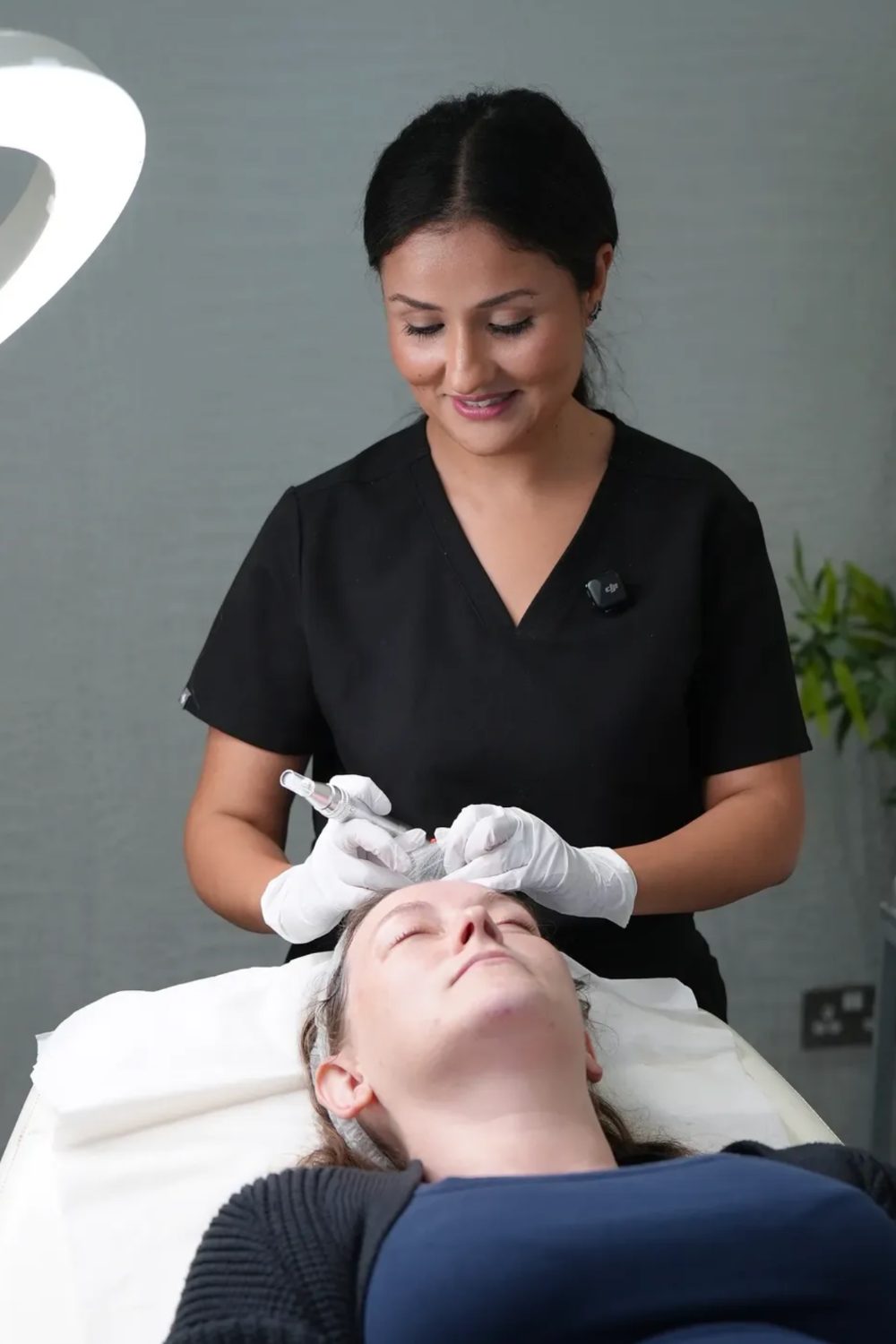
Creates tiny controlled channels in the skin to prompt repair, which can soften the texture of stretch marks and some raised or indented scars.
A laser treatment that can help even out the colour and texture of stretch marks and scars. Newer, coloured marks often respond better, and the evidence for any single treatment is limited.
At home, moisturising, protecting scars from the sun and keeping your weight steady all help, although creams alone rarely change established marks much.
What to Expect
What to expect depends on the treatment chosen, the settings used and the outcomes you agree with your doctor in your plan.
Most people need a course of several sessions spaced a few weeks apart, and the number depends on the area and the treatment. Microneedling and laser can leave skin red or tender for a few days. Collagen builds slowly, so changes usually show over a few months, and some people choose occasional maintenance sessions. Stretch marks fade and soften but do not disappear.
How We Approach Stretch Marks and Loose Skin at Aarva
We treat body skin as a medical question first. If new stretch marks or a changing scar do not fit the usual story, we look for the cause before treatment, with tests through our private GP service on the same record.
You go home with a written treatment plan with clear pricing, and you can take your time to decide. If a treatment is unlikely to help, or surgery would serve you better, you will hear that from us.
When to See a Doctor Sooner
See your GP if new stretch marks appear without a clear reason, especially with weight gain around the tummy, chest or back of the neck, a rounder, redder face, thin arms and legs, easy bruising, muscle weakness or high blood pressure. These can point to a hormonal cause such as Cushing’s syndrome. Also get advice if a scar becomes painful, keeps growing beyond the original wound, bleeds, or if a mole or lump appears within it.
This list is not exhaustive. If you are not sure about something, see a doctor.
Questions Patients Ask About Loose Skin, Stretch Marks and Scarring
Cannot see your question? Our doctors are happy to talk it through at your consultation.
No treatment removes stretch marks completely. They can be made softer, flatter and closer to your skin colour, and newer marks usually respond better than older ones.
Mild loose skin can firm up with treatments such as radiofrequency. Significant excess skin usually needs surgery, and we will tell you honestly if that applies to you.
We usually suggest waiting until your body has settled and you have finished breastfeeding, as some treatments are not advised while breastfeeding.
Many mature scars can be softened with microneedling or laser. We assess the scar type first, as raised keloid scars need a different approach.
The price depends on the areas treated and the plan agreed with your doctor. It is confirmed in writing before any treatment starts.
Why Patients Choose Aarva
Doctor-led from the first appointment
Every consultation is with a doctor, and every plan is written by a practising GP.
GPs still in practice
Our doctors, Dr Saptarshi Saha, Dr Purti Choudhary and Dr Shivani Malhotra, are GMC-registered GPs who still work in general practice.
One medical record
GP, skin and women’s health care sit on one record, so nothing gets lost between appointments.
It starts with a consultation
A doctor assesses you properly, explains your options and gives you a written treatment plan with clear pricing, so every step that follows is the right one.
Come to Us With a Problem, Not a Treatment
For a doctor’s honest view, book a consultation or use Find your starting point.
Related conditions: Fine lines and wrinkles · Acne scarring · Hair thinning and hair loss · Loss of firmness and skin laxity
Related treatments: Sectum Radiofrequency · Dermapen microneedling
This page is general information and does not replace a consultation with a doctor.