

Home › Conditions › Vaginal dryness and menopause-related changes
Vaginal dryness and menopause-related changes
Vaginal dryness is very common around and after menopause, when falling oestrogen thins and dries the vaginal tissues. It usually responds well to vaginal moisturisers, lubricants and, where appropriate, local hormone treatment. A doctor assesses it as part of your menopause care and will talk honestly about other options if these are not enough.
Understanding Vaginal Dryness and Menopause-related Changes
Vaginal dryness can cause itching, soreness, burning, discomfort when sitting or walking, and painful sex after menopause. Doctors call the wider group of changes genitourinary syndrome of menopause (previously vaginal atrophy), because it can also affect the bladder, causing urgency, needing to pass urine more often, or recurrent UTIs after menopause. Unlike hot flushes, these symptoms tend not to settle with time.
Many women put up with menopause dryness for years, often because they feel awkward raising it. Our doctor-led clinic in Sutton Coldfield cares for it within our women’s health service, on the same medical record as your other care. We see women from Sutton Coldfield, Birmingham and the surrounding area.
What Causes Vaginal Dryness?
Oestrogen keeps the vaginal lining thick, moist and elastic. When levels fall, the tissues become thinner, drier and more easily irritated. Causes include:
- Perimenopause and menopause, including early or surgical menopause
- Breastfeeding and the months after pregnancy
- Some medicines, including certain contraceptives, antidepressants and breast cancer treatments
- Cancer treatments such as chemotherapy or pelvic radiotherapy
- Conditions such as diabetes or Sjögren’s syndrome
- Perfumed soaps, washes and douches, which can irritate the area
How We Assess Vaginal Dryness at Aarva
You see a doctor first, in a private room, with a chaperone offered. We ask about your symptoms, periods or menopause, bladder symptoms, sex, medicines and medical history, including any history of breast cancer, as this affects which treatments suit you.
With your consent we examine the area to confirm the cause and rule out other conditions, such as infections or skin conditions affecting the vulva. Where your wider menopause symptoms need attention too, we look at those in the same appointment.
Treatment Options for Vaginal Dryness
First-line care follows NHS and national guidance: regular vaginal moisturisers, a lubricant for sex, and local hormone treatment, where appropriate, prescribed after consultation. Local treatment works in the vagina itself and is suitable for many women, including some who cannot take other hormone treatment. It often helps bladder symptoms and can reduce recurrent UTIs.
If symptoms persist despite this, or you would prefer to explore further options, we may discuss an in-clinic treatment.
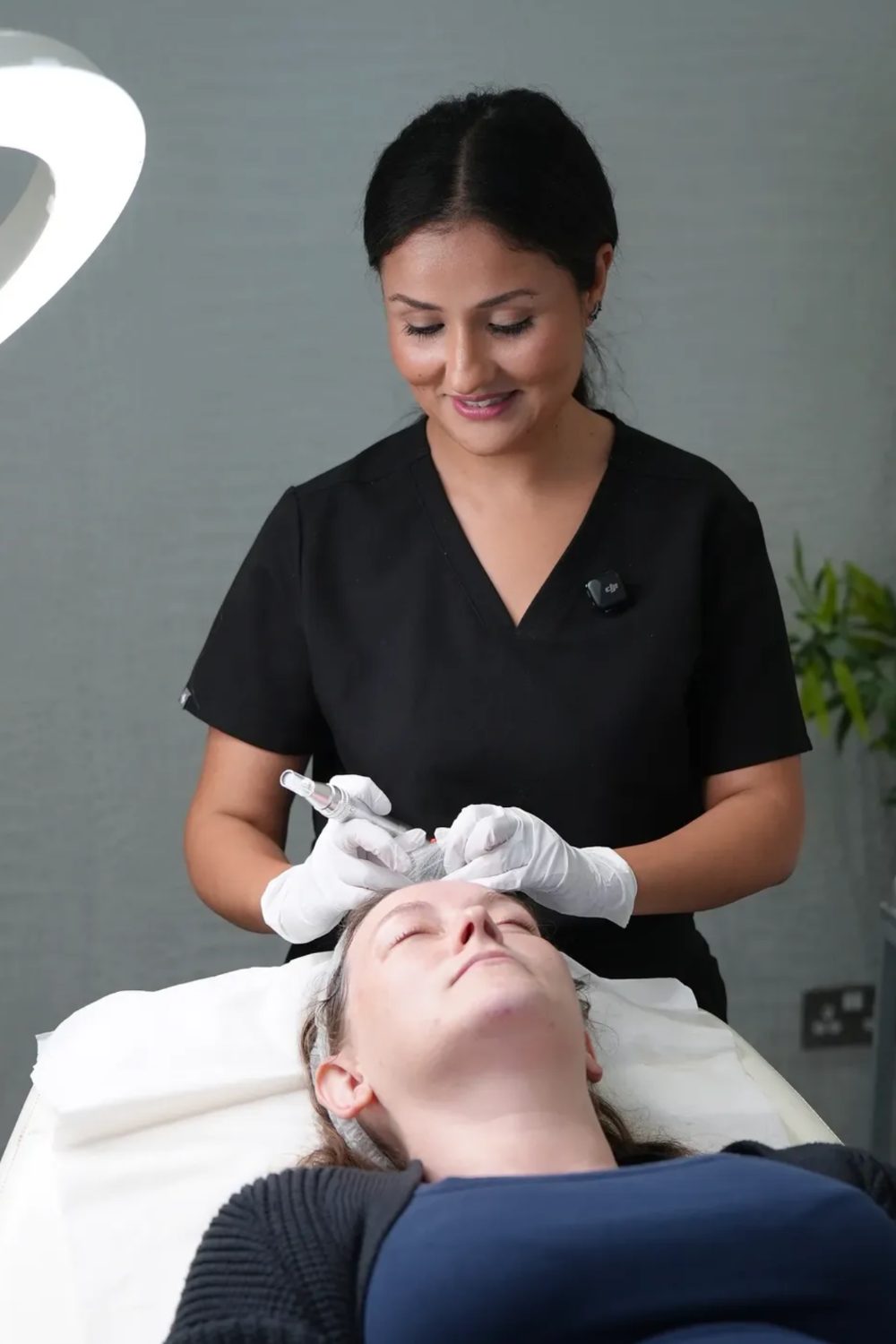
Uses gentle radiofrequency heat, intended to encourage collagen and moisture in the vaginal tissues, with an option combined with hyaluronic acid. Some women report less dryness, but the evidence is limited, long-term results are not known, and the US regulator and UK specialist bodies have urged caution about energy-based vaginal devices, so it is an addition to proven care rather than a replacement.
Using unperfumed products, washing with plain water and allowing plenty of time for arousal before sex can all ease discomfort.
What to Expect
What to expect depends on the treatment chosen, the settings used and the outcomes you agree with your doctor in your plan.
Moisturisers help within days to weeks when used regularly. Local hormone treatment often takes a few weeks to help and up to three months for the full effect, and symptoms usually come back if it is stopped, so most women continue long-term with review. If you have an in-clinic treatment, it is usually a short course of sessions a few weeks apart, with mild warmth or discharge for a day or two, and you may need maintenance.
How We Approach Vaginal Dryness at Aarva
We see vaginal dryness as part of menopause care, not a separate cosmetic issue. Because our GP and women’s health services share one record, we can look at your hormones, bladder symptoms and general health together.
If proven first-line care is all you need, we will tell you. Otherwise, we give you a written treatment plan to take away, with a clear pricing structure.
When to See a Doctor Sooner
See a doctor promptly if you have any bleeding after menopause, even a small amount, as it always needs checking. Also get advice if you have bleeding after sex or between periods, unusual or smelly discharge, a lump or sore in the vulva or vagina, or pain that is getting worse. If you have signs of a kidney infection, such as fever, shivering or pain in your back or side, call 111 or your GP the same day.
This list is not exhaustive. If you are not sure about something, see a doctor.
Questions Patients Ask About Vaginal Dryness and Menopause-related Changes
Cannot see your question? Our doctors are happy to talk it through at your consultation.
Regular vaginal moisturisers, a lubricant for sex and, where appropriate, local hormone treatment prescribed by a doctor help most women. Avoiding perfumed products also makes a difference.
Yes, it is one of the most common menopause symptoms, caused by falling oestrogen. Unlike hot flushes it often continues or worsens over time without treatment.
Many women who cannot take other hormone treatment can still use local vaginal treatment, as very little is absorbed. Your doctor will check your history, including any breast cancer, before advising.
Lower oestrogen changes the vaginal and urinary tissues, which can make infections more likely. Local hormone treatment can reduce recurrent UTIs in some women, so it is worth discussing with a doctor.
The price depends on your assessment and the plan agreed with your doctor. It is confirmed in writing before any treatment starts.
Why Patients Choose Aarva
Doctor-led from the first appointment
Every consultation is with a doctor, and every plan is written by a practising GP.
GPs still in practice
Our doctors, Dr Saptarshi Saha, Dr Purti Choudhary and Dr Shivani Malhotra, are GMC-registered GPs who still work in general practice.
One medical record
GP, skin and women’s health care sit on one record, so nothing gets lost between appointments.
It starts with a consultation
A doctor assesses you properly, explains your options and gives you a written treatment plan with clear pricing, so every step that follows is the right one.
Come to Us With a Problem, Not a Treatment
If dryness is affecting your comfort or your relationship, book a consultation or use Find your starting point.
Related conditions: Vaginal laxity
This page is general information and does not replace a consultation with a doctor.