

Home › Conditions › Neck lines and crepey neck
Neck lines and crepey neck
Neck lines and crepey neck skin are common signs of sun exposure, ageing and posture, and they often show earlier than lines on the face. They can usually be softened, though not erased. A doctor works out what is driving the change in your neck before any treatment is suggested.
Understanding Neck Lines and Crepey Neck
Neck lines take a few forms. Horizontal necklace lines run around the neck, tech neck lines appear from years of looking down at phones and laptops, and vertical neck bands can stand out when you talk or tense. Some people notice crepey neck skin that looks thin and finely wrinkled, or a sagging neck, sometimes called turkey neck, under the chin.
The skin on the neck is thinner than on the face and has fewer oil glands, so it often shows age sooner. It is common to feel that your neck no longer matches your face. At our Sutton Coldfield practice, north of Birmingham, neck care sits within our medical-grade skin service.
What Causes Neck Lines?
Most people have more than one cause at work, which is why the right plan differs from person to person.
- Sun damage: ultraviolet light breaks down collagen and elastin, and the neck is often missed when applying sunscreen.
- Natural ageing: skin becomes thinner and less elastic, and the fat and muscle beneath it change.
- Repeated movement and posture: looking down for long periods creases the skin in the same place.
- Muscle bands: the thin muscle at the front of the neck can form visible vertical bands as we age.
- Weight change, genetics and smoking all affect how well neck skin holds its shape.
How We Assess Neck Lines at Aarva
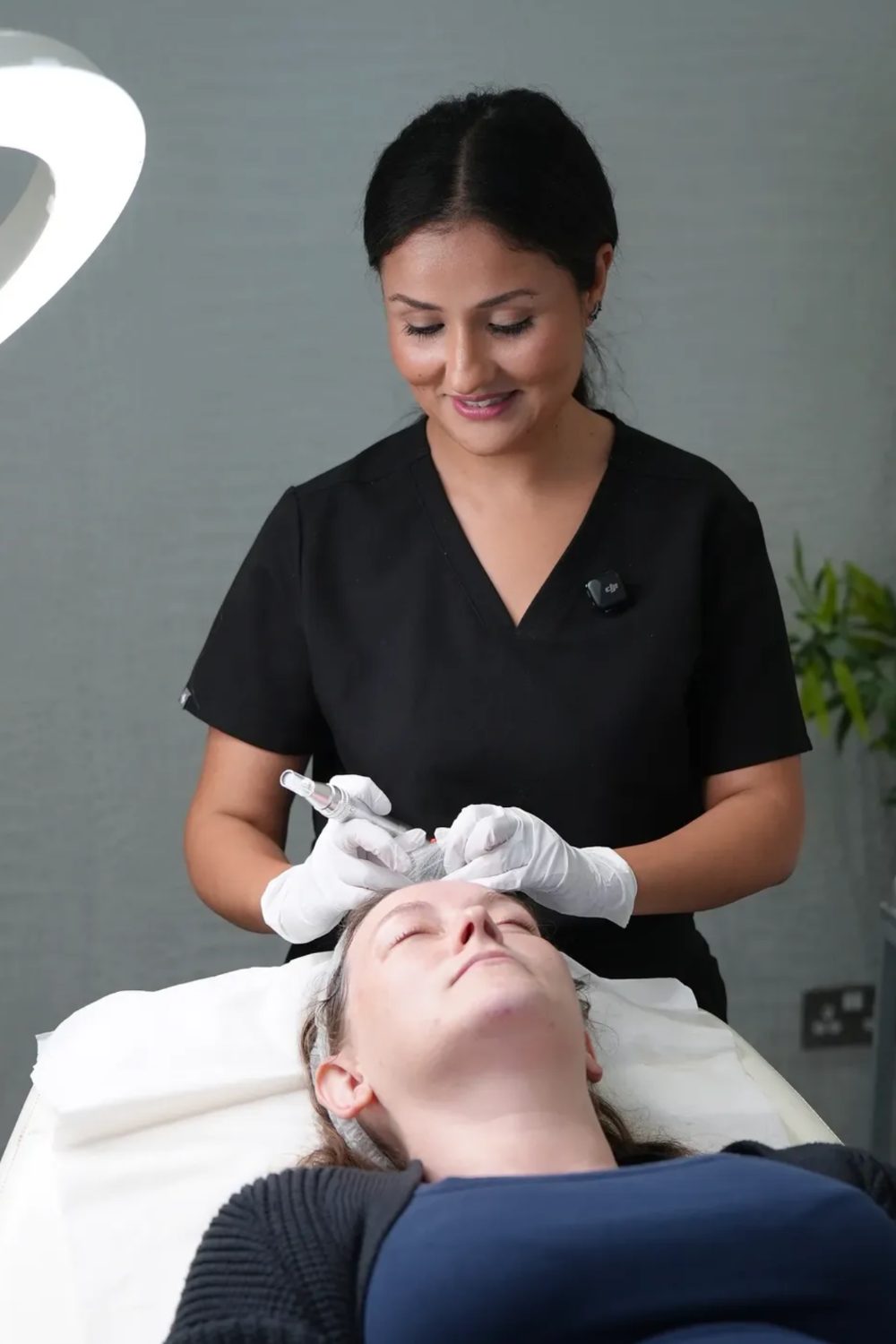
A doctor looks at your neck at rest and while you speak and tense, because lines in the skin and bands in the muscle need different approaches. We check skin thickness, texture and how much looseness there is. As doctors, we also examine the neck properly so nothing medical is missed.
At your skin consultation, Aura 3D skin analysis helps us record skin quality, so we can compare progress over time. If there is significant sagging, we will tell you honestly if a surgical opinion would serve you better than injectables or devices.
Treatment Options for Neck Lines
Your plan depends on the assessment and often combines treatments in stages, agreed at consultation.
A prescription-only treatment that relaxes the muscle behind prominent neck bands, only considered after a face-to-face consultation with a doctor. It does not help crepey skin or sagging.
A hyaluronic acid injectable that spreads within the skin to improve hydration and the look of crepey neck skin. It improves skin quality rather than lifting a sagging neck.
Controlled heat delivered into the deeper layers of the skin to encourage collagen and a mild tightening effect. Results are gradual and modest, and it will not replace surgery for marked looseness.
Injections intended to support skin repair and improve texture and firmness in thin neck skin. The evidence is still developing, and we will talk you through what is known.
A laser treatment that improves the texture and tone of neck skin and softens fine lines, with minimal downtime.
A resurfacing laser that stimulates collagen and improves texture, lines and sun damage on the neck. The depth is set for your skin.
Platelet-rich plasma prepared from your own blood and placed into the neck skin to support repair and skin quality. Results vary and build over a course.
Daily broad-spectrum sunscreen on the neck and chest, a good moisturiser and regular breaks from looking down all help protect your results.
What to Expect
What to expect depends on the treatment chosen, the settings used and the outcomes you agree with your doctor in your plan.
Skin treatments for the neck usually need a short course rather than a single session, followed by occasional maintenance. Injectables can cause small bumps, redness or bruising for a few days. Radiofrequency usually leaves some redness that settles within a day or so.
Changes in skin quality tend to show over several weeks, with collagen continuing to build for some months. Muscle-relaxing treatment usually takes up to two weeks to show and wears off over a few months.
How We Approach Neck Lines at Aarva
We look at the neck alongside the face and jawline, and find the main cause first: sun damage, thin skin, muscle bands or looseness. That tells us which treatments are likely to help, and which are not worth your money.
You take away a written plan with the price set out, to consider before you book. If your neck would not benefit from treatment, or needs a different kind of specialist, we will say so plainly.
When to See a Doctor Sooner
See your GP if you notice a new lump or swelling in your neck that does not go down within two weeks, is getting bigger, or feels hard. Also see your GP if you have a hoarse voice for more than three weeks or difficulty swallowing. If a swelling in your neck makes it hard to breathe, call 999.
This list is not exhaustive. If you are not sure about something, see a doctor.
Questions Patients Ask About Neck Lines and Crepey Neck
Cannot see your question? Our doctors are happy to talk it through at your consultation.
It depends on the cause. Muscle bands, crepey skin and sagging each respond to different treatments, so a doctor needs to assess your neck first.
They can usually be softened with treatments that improve skin quality, plus changes to posture and screen habits. Deep, long-standing creases rarely disappear completely.
Profhilo can improve hydration and the look of crepey neck skin. It does not lift loose skin, so it suits texture more than sagging.
Neck changes vary, so it depends on the cause. Strong platysmal bands, tech neck lines linked to posture, loose skin and pigment deposits each need a different approach. Mild looseness may improve with radiofrequency and skin treatments, and AI Endolaser can help selected people with looseness under the chin and at the top of the neck. Marked sagging usually needs a surgical opinion, and we will tell you if that applies to you.
The price depends on your plan and how many sessions you need. It is confirmed in writing before any treatment begins.
Why Patients Choose Aarva
Doctor-led from the first appointment
Every consultation is with a doctor, and every plan is written by a practising GP.
GPs still in practice
Our doctors, Dr Saptarshi Saha, Dr Purti Choudhary and Dr Shivani Malhotra, are GMC-registered GPs who still work in general practice.
One medical record
GP, skin and women’s health care sit on one record, so nothing gets lost between appointments.
It starts with a consultation
A doctor assesses you properly, explains your options and gives you a written treatment plan with clear pricing, so every step that follows is the right one.
Come to Us With a Problem, Not a Treatment
If your neck is bothering you, book a consultation with one of our doctors, or try Find your starting point to see where to begin.
Related conditions: Fine lines and wrinkles · Loss of firmness and skin laxity · Dehydrated, tired-looking skin · Loose skin, stretch marks and scarring
Related treatments: Neauvia Hydro Deluxe
This page is general information and does not replace a consultation with a doctor.