

Home › Conditions › Hair thinning and hair loss
Hair thinning and hair loss
Hair thinning and hair loss have many causes, from low iron and thyroid problems to hormones, stress and genetics. Many types can be slowed or improved, especially when the cause is found early. That is why our first step is a doctor’s assessment, usually with blood tests, before any treatment is discussed.
Understanding Hair Thinning and Hair Loss
Hair loss can mean more hair shedding than usual in the shower or on your brush, a widening parting, a thinner ponytail or a receding hairline. Female hair loss is common and often goes unspoken, while male pattern baldness usually shows at the temples and crown. Losing 50 to 100 hairs a day is normal, so what matters is a change from what is usual for you.
Thinning hair can be a sign of something else going on in the body. Your assessment sits within our private GP service in Sutton Coldfield, just north of Birmingham, so tests and any treatment are on one record.
What Causes Hair Thinning and Hair Loss?
Hair grows in cycles, and anything that disturbs them can cause shedding or thinning. Common causes include:
- Telogen effluvium: heavy shedding a few months after illness, surgery, childbirth, stress, crash dieting or a new medicine, which usually settles once the trigger has passed
- Low iron stores, thyroid problems and some other vitamin or nutritional deficiencies
- Female pattern hair loss, with gradual thinning over the top of the scalp
- Male pattern baldness, which is largely inherited
- Hormonal changes, including polycystic ovary syndrome (PCOS), menopause and after pregnancy
- Alopecia areata, where the immune system causes round bald patches
- Scalp conditions such as psoriasis, and tight hairstyles that pull on the hair
How We Assess Hair Loss at Aarva
You see a doctor first. We ask when the thinning started, what else has changed in your health, and about medicines, periods, pregnancy and family history. We examine your scalp and hair closely to see the pattern and check for signs of inflammation or scarring.
Most people then have blood tests through our private GP service, typically including iron stores (ferritin), a full blood count and thyroid function, with other tests where your history suggests them. If hormones may be involved, such as PCOS, menopause or changes after pregnancy, our women’s health team can pick this up on the same record.
Treatment Options for Hair Thinning
The plan depends on the cause. Correcting a deficiency or treating a hormonal problem comes first, and scalp treatments are often combined in stages alongside that.
Platelet-rich plasma, prepared from your own blood and injected into the scalp to support weaker follicles. Some people see thicker hair, but the evidence is mixed and it does not help everyone.
Injections intended to support the scalp tissue around the follicles. The evidence for hair is early and limited, so we only suggest them where we think they are reasonable to try.
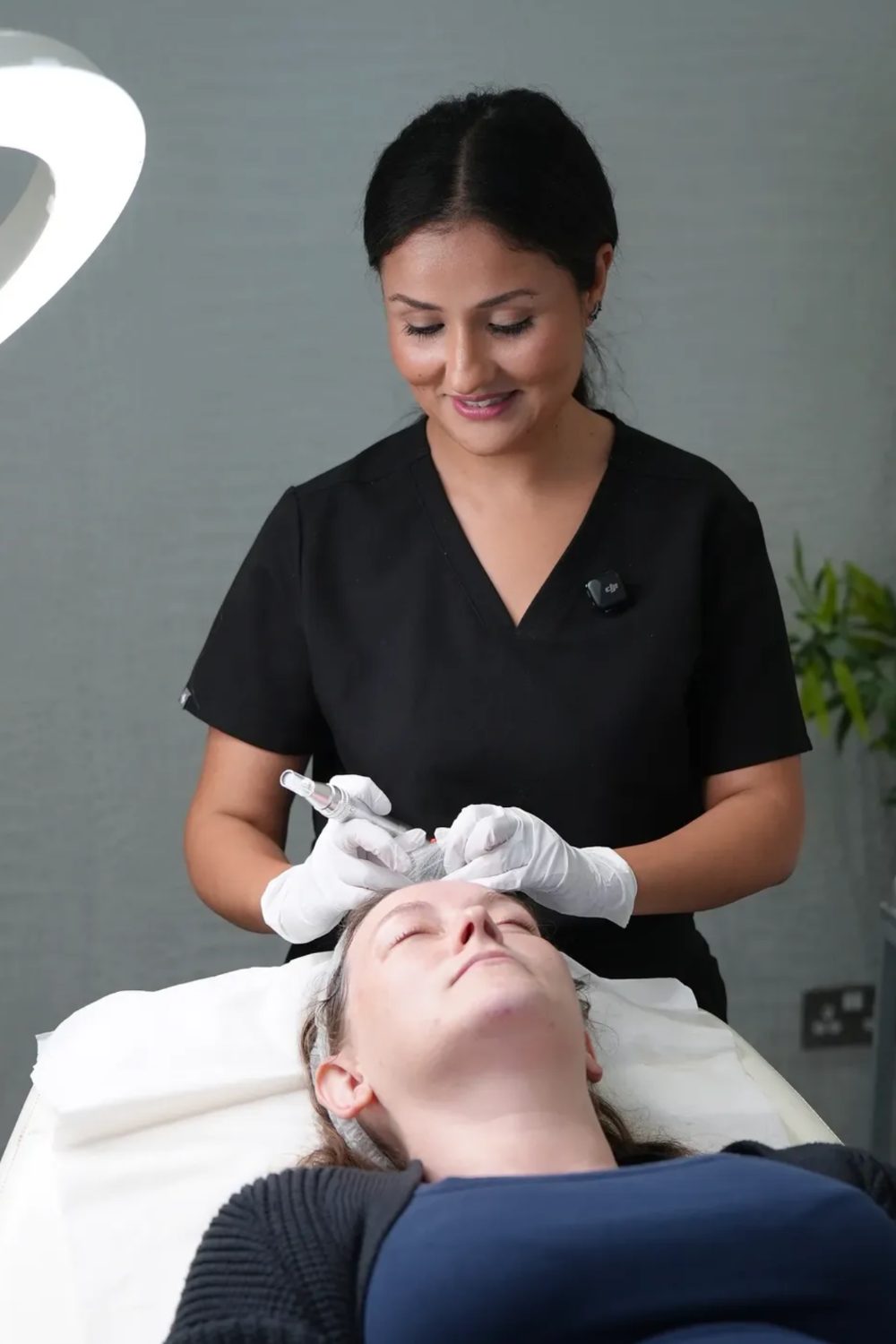
Fine needling of the scalp, which may encourage growth and is often used alongside other treatments rather than on its own.
Medical treatments, some prescription-only, can also help certain types of hair loss and are discussed at consultation. Whatever the cause, gentle hair care and a diet with enough protein and iron are sensible.
What to Expect
What to expect depends on the treatment chosen, the settings used and the outcomes you agree with your doctor in your plan.
Hair grows slowly, so any change takes time. Scalp treatments are usually given as a course of several sessions a few weeks apart, and you may notice some tenderness or redness for a day or so. Most people need three to six months before judging whether something is working, and pattern hair loss usually needs ongoing maintenance to hold the gains.
How We Approach Hair Thinning at Aarva
We look for the reason your hair is thinning before we treat it. If your ferritin is low or your thyroid is underactive, putting that right may be the most useful thing we do.
Your plan and its price come in writing, and you do not have to book anything on the day. Where a scalp treatment is unlikely to help your type of hair loss, we will say so.
When to See a Doctor Sooner
Get prompt medical advice if you have sudden or patchy hair loss, new bald patches, or a scalp that is painful, red, scaly, itchy or looks shiny and scarred, as some scarring conditions need early specialist treatment to limit lasting hair loss. Also see your GP if hair loss comes with other symptoms, such as tiredness, weight change, feeling cold, irregular periods, new facial hair or acne. If you feel very unwell, call 111.
This list is not exhaustive. If you are not sure about something, see a doctor.
Questions Patients Ask About Hair Thinning and Hair Loss
Cannot see your question? Our doctors are happy to talk it through at your consultation.
Common causes include low iron, thyroid problems, hormonal changes such as PCOS, menopause or pregnancy, stress or illness, and inherited female pattern hair loss. Blood tests and an examination usually narrow it down.
Doctors usually check iron stores (ferritin), a full blood count and thyroid function, with other tests depending on your symptoms. We arrange these through our private GP service before recommending treatment.
Some people see improvement with PRP, but the research is mixed and it does not work for everyone. We will tell you honestly whether it is worth trying for your type of hair loss.
In most cases, yes. Shedding usually settles once the trigger has passed, and regrowth follows over several months.
The price depends on your tests and the plan agreed with your doctor. It is confirmed in writing before any treatment starts.
Why Patients Choose Aarva
Doctor-led from the first appointment
Every consultation is with a doctor, and every plan is written by a practising GP.
GPs still in practice
Our doctors, Dr Saptarshi Saha, Dr Purti Choudhary and Dr Shivani Malhotra, are GMC-registered GPs who still work in general practice.
One medical record
GP, skin and women’s health care sit on one record, so nothing gets lost between appointments.
It starts with a consultation
A doctor assesses you properly, explains your options and gives you a written treatment plan with clear pricing, so every step that follows is the right one.
Come to Us With a Problem, Not a Treatment
If your hair is thinning and you want to know why, book a consultation or use Find your starting point.
Related conditions: Fine lines and wrinkles · Acne scarring · Loose skin, stretch marks and scarring · Under-eye hollows and dark circles
This page is general information and does not replace a consultation with a doctor.