

Home › Conditions › Dull, uneven skin and enlarged pores
Dull, uneven skin and enlarged pores
Enlarged pores, dull skin and uneven texture are very common and are usually linked to oil production, genetics, sun damage and age. Pores cannot be closed or removed, but they can look smaller and skin can look brighter and smoother. Your plan is built in stages once a doctor has looked at what is behind the problem.
Understanding Dull, Uneven Skin and Enlarged Pores
Enlarged pores are most noticeable on the nose, cheeks and forehead, especially in oily skin. Many people also describe dull skin that has lost its brightness, rough skin that feels uneven to touch, or uneven skin tone with patches of redness or pigment.
At our practice in Sutton Coldfield, just north of Birmingham, a doctor looks at your skin as a whole rather than treating a single symptom. This sits within our medical-grade skin service.
What Causes Enlarged Pores and Dull, Uneven Skin?
Pore size is largely genetic, but several things make pores look bigger and skin look tired.
- Oily skin: more oil stretches the pore opening and makes large pores more visible.
- Blocked pores: dead skin and oil collect in the pore, and blackheads make it stand out.
- Sun damage and age: loss of collagen around the pore lets it sag and look wider.
- Slow skin turnover: dead cells build up on the surface, so light reflects unevenly and skin looks dull.
- Hormones and acne: breakouts and inflammation can leave marks and uneven texture behind.
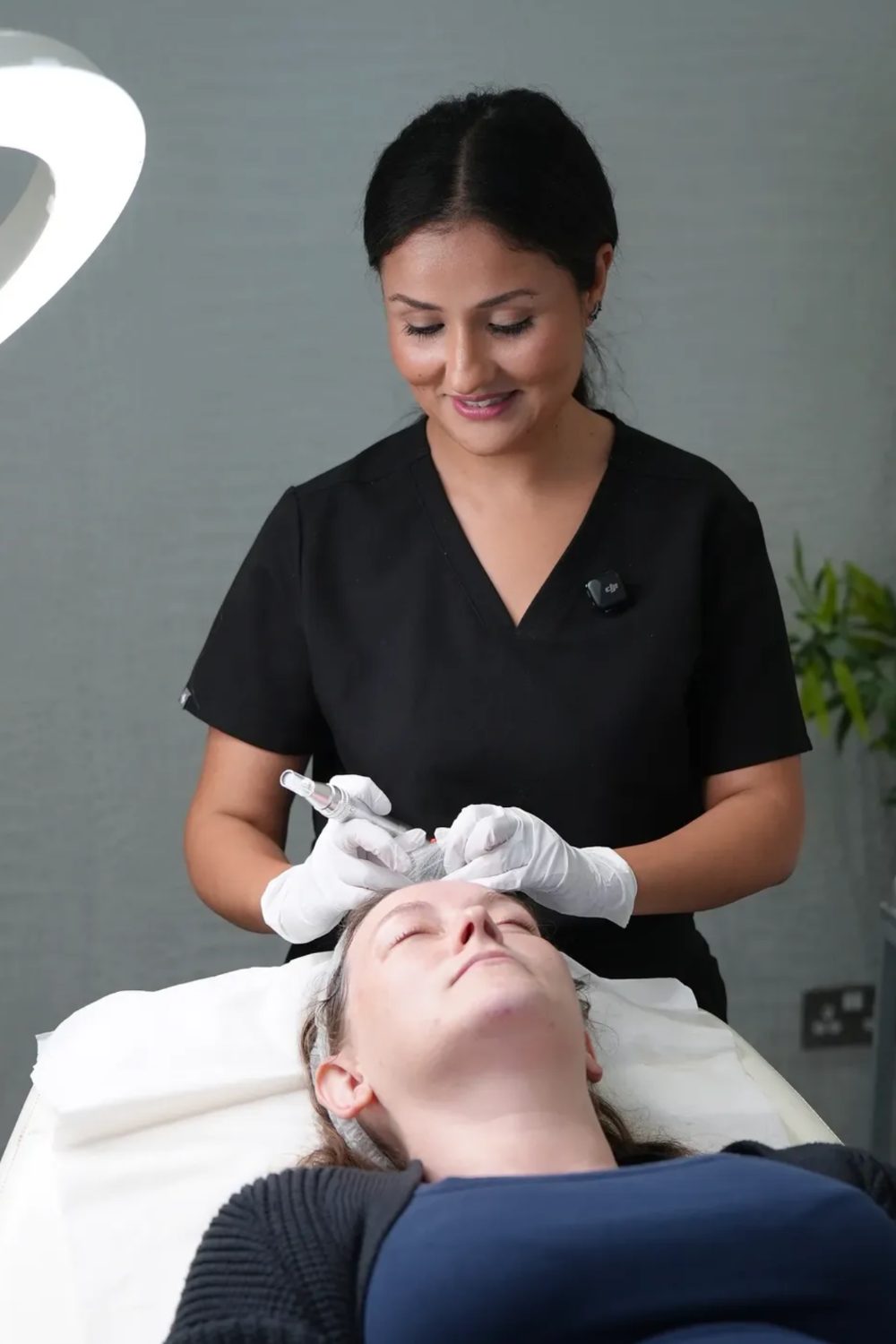
How We Assess Enlarged Pores at Aarva
A doctor asks about your skin history, routine, products, periods and any acne or flushing. We look for conditions that can sit behind dull, uneven skin, such as acne, rosacea or pigment problems, because these change what we would recommend.
At your skin consultation, Aura 3D skin analysis records pores, texture and tone, giving us a baseline to measure progress against. We also take your skin type and colour into account, as some lasers and peels carry a higher risk of darker marks in brown and black skin.
Treatment Options for Enlarged Pores
Your plan depends on the assessment, and most plans combine treatments in stages, set at consultation.
A resurfacing facial that exfoliates the surface to brighten dull skin and smooth rough texture. Its effect on pores alone is modest.
A gentle laser treatment aimed at texture, tone and the look of pores. Improvement is gradual, with limited recovery time.
A fractional laser that can be set gently or more strongly to resurface uneven texture and tone. Stronger settings can give more change but need more recovery time.
A hyaluronic acid skin booster injected into the skin to improve hydration and firmness. Firmer skin around the pores may help them look a little smaller.
Acids that clear dead skin and oil from the surface and pores. The strength is chosen to match your skin type.
At home, a gentle cleanser, a non-comedogenic moisturiser and daily sunscreen do much of the work between appointments, and prescription creams may be suggested where appropriate, after consultation.
What to Expect
What to expect depends on the treatment chosen, the settings used and the outcomes you agree with your doctor in your plan.
Most people need a course of treatments a few weeks apart rather than one visit. Facials and light peels often cause a little redness for a day. Laser treatments can leave redness, swelling or a sandpaper feel for several days, depending on the strength.
Brightness can show within days, while texture and pores usually improve over a few months. Pores will always be there, so maintenance and good daily skincare keep the improvement going.
How We Approach Enlarged Pores at Aarva
We look for the cause before we treat. If oily skin or breakouts come with irregular periods or other hormonal symptoms, our women’s health doctors can look into it on the same medical record, rather than you starting again elsewhere.
You are given a written treatment plan to take away, with clear pricing, and you can book on the day or take time to think it over. We will also be straight about what is realistic: pores can look smaller and skin can look smoother, but no treatment removes pores.
When to See a Doctor Sooner
See your GP if a mole or spot is changing in size, shape or colour or bleeds, or if you have a sore that does not heal within four weeks. Also see your GP if you have sudden acne alongside irregular periods, extra hair growth or weight gain, as these can point to a hormonal cause. A rough, scaly patch that keeps coming back on sun-exposed skin should also be checked.
This list is not exhaustive. If you are not sure about something, see a doctor.
Questions Patients Ask About Dull, Uneven Skin and Enlarged Pores
Cannot see your question? Our doctors are happy to talk it through at your consultation.
No. Pore size is mostly genetic, and pores cannot be closed or removed. Treatments can make them look smaller, and good skincare helps keep them that way.
Common reasons include a build-up of dead skin, dehydration, sun damage and lack of sleep. A doctor can check for skin conditions or health issues that might be contributing.
It depends on your skin type, colour and how much recovery time you have. Many plans use both at different stages.
Often, yes. More oil can stretch and block pores, and controlling oil can help them look smaller.
The price depends on your plan and how many sessions you need. It is confirmed in writing before any treatment starts.
Why Patients Choose Aarva
Doctor-led from the first appointment
Every consultation is with a doctor, and every plan is written by a practising GP.
GPs still in practice
Our doctors, Dr Saptarshi Saha, Dr Purti Choudhary and Dr Shivani Malhotra, are GMC-registered GPs who still work in general practice.
One medical record
GP, skin and women’s health care sit on one record, so nothing gets lost between appointments.
It starts with a consultation
A doctor assesses you properly, explains your options and gives you a written treatment plan with clear pricing, so every step that follows is the right one.
Come to Us With a Problem, Not a Treatment
If dull skin or large pores bother you, book a consultation with one of our doctors, or use Find your starting point to work out where to begin.
Related conditions: Acne scarring · Acne and breakouts · Pigmentation and sun damage · Melasma
Related treatments: Dermapen microneedling · Medical-grade skincare
This page is general information and does not replace a consultation with a doctor.