

Home › Conditions › Acne scarring
Acne scarring
Acne scarring is the lasting change in skin texture or colour left behind after spots have healed. Scars can usually be improved, though not erased, and most people need several sessions. Before any scar treatment, we check that active acne is under control, then plan around the types of scar you have.
Understanding Acne Scarring
Acne scarring affects many people who had moderate or severe acne, and sometimes those whose acne seemed fairly mild. Scars can be pitted and sunken, giving the skin an uneven, textured look, or less often raised and firm.
Different scars respond to different treatments, so we think the assessment matters more than any single device. We see patients from across Sutton Coldfield and Birmingham as part of our medical-grade skin service.
What Causes Acne Scarring?
When a spot is deep or inflamed, it damages the collagen in the skin around it. As the skin repairs itself, too little or too much new collagen can form, leaving a scar. The main types are:
- Ice pick scars: narrow, deep pits, like large open pores.
- Rolling scars: wide, shallow dips with soft edges that give the skin a wavy look.
- Boxcar scars: broader depressions with sharper, defined edges.
- Raised scars: firm, lumpy (hypertrophic or keloid) scars, more common on the chest, back, shoulders and jawline.
- Red or brown marks: changes in colour rather than texture. These are not true scars and often fade on their own over months.
Scarring is more likely with deep, cystic or long-standing acne, and when spots are picked.
How We Assess Acne Scarring at Aarva
A doctor examines your skin in good light and from different angles, because the type and depth of each scar decides which treatments are worth trying. We also check for active acne. Treating scars while new spots keep appearing is frustrating and can make things worse, so if acne is still active we treat that first.
At your skin consultation, Aura 3D skin analysis helps us record texture and pitted skin in detail, so we can measure change later.
Treatment Options for Acne Scarring
Most plans combine two or more treatments in stages. Scar type guides the choice, and so does skin tone, because some lasers and peels are more likely to leave dark marks on brown and black skin.
A fractional laser that resurfaces the skin to soften texture and even out tone. It tends to suit shallower scars and marks, and several sessions are usually needed.
A laser option we may use as part of a combined plan to improve texture and uneven tone. Whether it suits you depends on your scar types and skin tone.
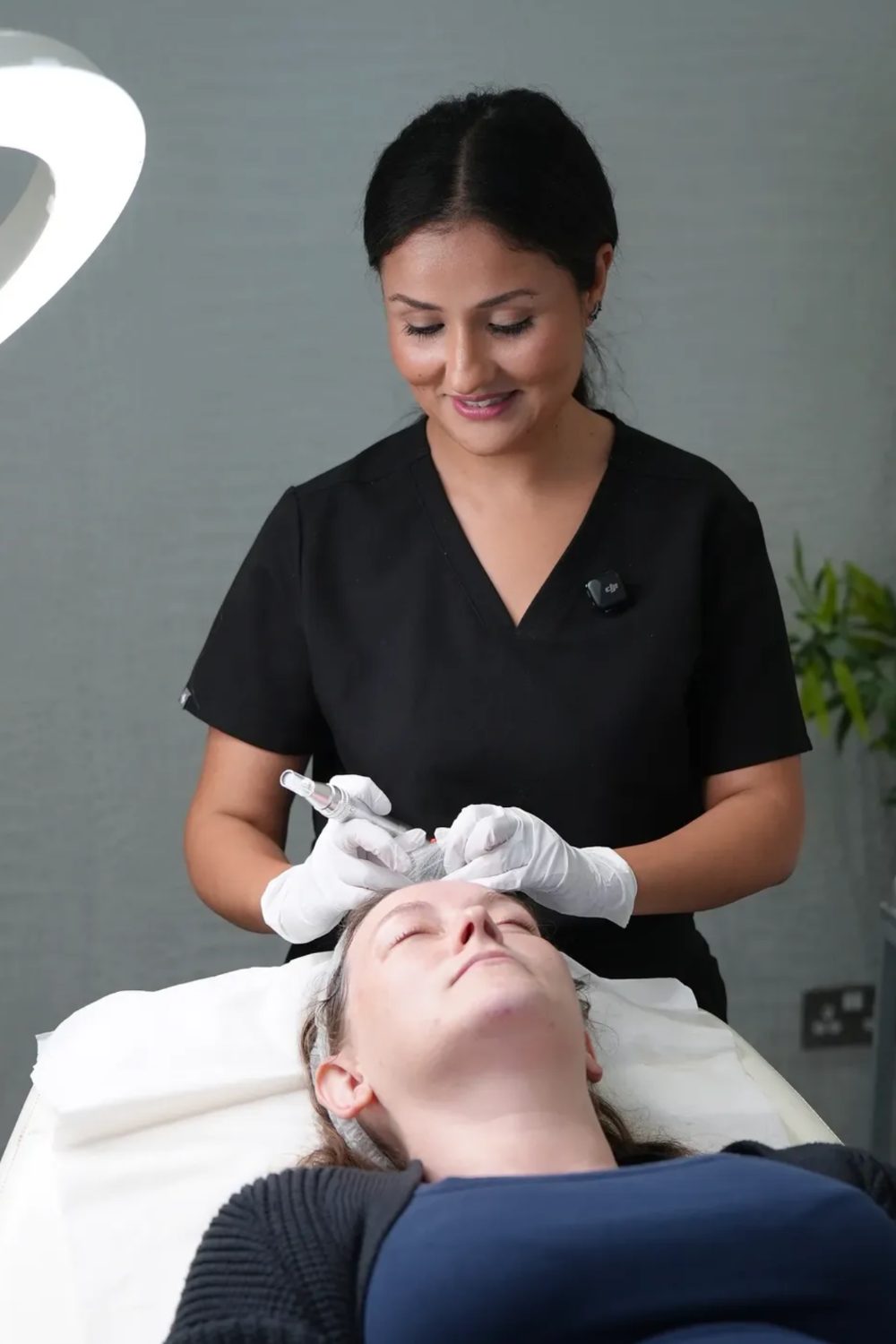
Fine needles create tiny controlled injuries that encourage new collagen. It can help rolling and boxcar scars, but deep ice pick scars respond less well.
Platelet-rich plasma from your own blood, often used alongside microneedling to support healing. The evidence for acne scars is mixed, so we discuss it honestly before adding it.
Peels can help post-acne marks and very shallow scarring, and are often used to prepare the skin or between other treatments.
Daily sunscreen helps red and brown marks fade and protects skin between treatments. Try not to pick or squeeze spots, as this raises the chance of new scars.
What to Expect
What to expect depends on the treatment chosen, the settings used and the outcomes you agree with your doctor in your plan.
Several sessions are usually needed, spaced some weeks apart. Collagen rebuilds slowly, so improvement tends to show gradually over a few months after a course.
Downtime depends on the treatment. Microneedling and laser can leave the skin red, swollen or rough for a few days. Scars improve rather than disappear, and a realistic aim is smoother, more even skin that is less noticeable.
How We Approach Acne Scarring at Aarva
We start with the cause. If you still get breakouts, we look at why, including hormonal factors that our women’s health or private GP doctors can investigate on the same medical record.
We then match treatment to your scar types instead of offering one device for everyone. The plan and its price are written down for you to take away and think over. If we do not expect a treatment to help your scars, we will say so.
When to See a Doctor Sooner
See your GP if you still have painful, deep or cystic spots, or if new scars keep forming, as prescription acne treatment may be needed to prevent more damage. Talk to your GP too if acne or scarring is affecting your mood. If you feel very low or unable to cope, contact your GP urgently or call 111.
This list is not exhaustive. If you are not sure about something, see a doctor.
Questions Patients Ask About Acne Scarring
Cannot see your question? Our doctors are happy to talk it through at your consultation.
Acne scars can usually be improved, often noticeably, but not removed completely. Most people see smoother, more even skin after a course of treatment.
Most people need several sessions spaced weeks apart. The number depends on the types and depth of your scars, which we discuss at consultation.
We usually get active acne under control first. Treating scars while new spots form can irritate the skin and new scars may appear.
Flat red or brown marks often fade over several months without treatment. Sun protection helps, and some treatments can speed things up.
The price depends on the plan and number of sessions agreed at your consultation. We confirm it in writing before any treatment starts.
Why Patients Choose Aarva
Doctor-led from the first appointment
Every consultation is with a doctor, and every plan is written by a practising GP.
GPs still in practice
Our doctors, Dr Saptarshi Saha, Dr Purti Choudhary and Dr Shivani Malhotra, are GMC-registered GPs who still work in general practice.
One medical record
GP, skin and women’s health care sit on one record, so nothing gets lost between appointments.
It starts with a consultation
A doctor assesses you properly, explains your options and gives you a written treatment plan with clear pricing, so every step that follows is the right one.
Come to Us With a Problem, Not a Treatment
If acne scarring is bothering you, book a consultation with one of our doctors, or use Find your starting point to see where to begin.
Related conditions: Dull, uneven skin and enlarged pores · Loose skin, stretch marks and scarring · Hair thinning and hair loss · Pigmentation and sun damage
This page is general information and does not replace a consultation with a doctor.