

Home › Conditions › Pigmentation and sun damage
Pigmentation and sun damage
Pigmentation means darker patches or spots where the skin has made extra melanin, most often because of sun damage or past inflammation. It can usually be faded and evened out, although new spots can appear without good sun protection. Every mark is checked by a doctor first, and treatment is then planned around the type of pigmentation you have.
Understanding Pigmentation and Sun Damage
Pigmentation and sun damage show up as sun spots, age spots, freckles that have darkened, or a general uneven skin tone. They are most common on the face, hands, chest and shoulders, where skin has had the most sun over the years. Post-inflammatory hyperpigmentation is different: dark spots left behind after acne, eczema, a burn or a harsh treatment, and it is more common in darker skin.
Not every brown mark is harmless pigmentation, so the first step is always an assessment by a doctor. We see patients from Sutton Coldfield, Birmingham and the surrounding area, and pigmentation care is part of our medical-grade skin service.
What Causes Pigmentation and Sun Damage?
When pigment cells are overstimulated, or work unevenly, dark spots form. The main triggers are:
- Sun exposure: years of ultraviolet light cause sun spots (also called age spots or solar lentigines) and a blotchy, uneven tone.
- Inflammation: spots, eczema, cuts, burns or irritation from products can leave post-inflammatory hyperpigmentation.
- Hormones: hormonal patches on the face are usually melasma, which needs a more cautious approach.
- Skin type and genes: people with darker skin are more prone to post-inflammatory marks, and freckling runs in families.
How We Assess Pigmentation at Aarva
A doctor looks closely at each mark before any treatment is discussed. A spot that is new, changing or looks different from the others may need a medical check or referral, not a cosmetic treatment.
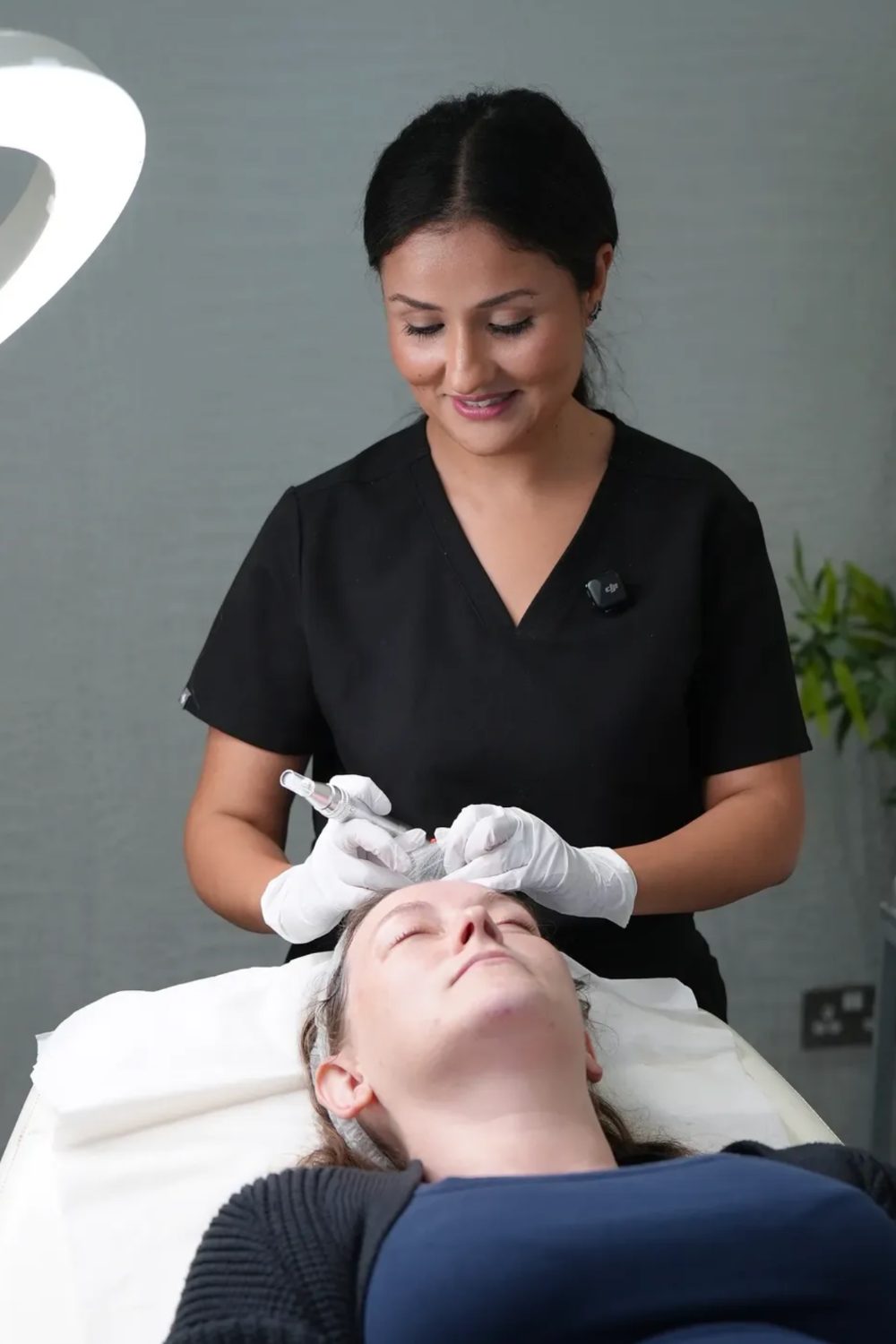
At your skin consultation, Aura 3D skin analysis helps us map sun damage and pigment across your face and record a baseline for comparison later. We also ask how easily your skin darkens after irritation, as this shapes which treatments make sense.
Treatment Options for Pigmentation
The right plan depends on the type and depth of your pigmentation and your skin type. Plans often combine treatments in stages.
A fractional laser that can target sun spots, sun damage and uneven tone. Whether it suits you depends on your skin type and the kind of pigment, which we check first.
A depigmentation treatment with an in-clinic mask and a home cream. It can help stubborn or widespread pigmentation, with maintenance needed afterwards.
Peels remove the top layers of skin to fade surface pigment and even out tone. We choose the strength carefully, as a peel that is too strong can cause new dark marks.
A daily routine to regulate pigment and protect the skin, with prescription creams where appropriate, after consultation.
Whatever the plan, daily broad-spectrum sunscreen of SPF 30 or higher matters most. Without it, new sun spots form and treated areas can darken again.
What to Expect
What to expect depends on the treatment chosen, the settings used and the outcomes you agree with your doctor in your plan.
Most people need more than one session, and results build over several weeks to a few months. Sun spots often respond faster than post-inflammatory marks, which can take longer to settle.
Depending on the treatment, you may have redness, flaking or small darkened spots that lift off over a week or so. Sun damage builds with time, so occasional maintenance is common.
How We Approach Pigmentation at Aarva
We treat pigmentation as a medical question first. Checking moles and skin changes is part of our everyday work as GPs, and we will not treat a mark we are not happy with. If something needs referral, we tell you plainly and help you get it seen.
Once we know what we are dealing with, we look for the cause, whether that is sun, inflammation or hormones, so the plan tackles it. We will tell you if a treatment is unlikely to help. We give you a written treatment plan to take away, with a clear pricing structure.
When to See a Doctor Sooner
See your GP promptly if a mole or dark spot is new or changing. Warning signs include an uneven shape, a ragged or blurred edge, several colours, a mark larger than about 6 mm, or any change in size, shape or colour. A spot that bleeds, itches, crusts or does not heal within a few weeks should also be checked. These changes can be a sign of skin cancer, and early checks matter.
This list is not exhaustive. If you are not sure about something, see a doctor.
Questions Patients Ask About Pigmentation and Sun Damage
Cannot see your question? Our doctors are happy to talk it through at your consultation.
Sun spots are small, defined marks caused by sun damage. Melasma forms larger, hormone-related patches, often on both cheeks, and needs gentler treatment because some methods can make it worse.
Many dark spots can be faded significantly, and some clear well. New spots can form over time, so daily sun protection is important to keep results.
It often fades on its own over months, although it can take longer in darker skin. Treatment and sun protection can help speed this up.
Some lasers carry a higher risk of new pigmentation in darker skin. We assess your skin type first and may suggest a different option if laser is not the right choice.
The cost depends on the plan agreed at your consultation. We confirm the price in writing before any treatment starts.
Why Patients Choose Aarva
Doctor-led from the first appointment
Every consultation is with a doctor, and every plan is written by a practising GP.
GPs still in practice
Our doctors, Dr Saptarshi Saha, Dr Purti Choudhary and Dr Shivani Malhotra, are GMC-registered GPs who still work in general practice.
One medical record
GP, skin and women’s health care sit on one record, so nothing gets lost between appointments.
It starts with a consultation
A doctor assesses you properly, explains your options and gives you a written treatment plan with clear pricing, so every step that follows is the right one.
Come to Us With a Problem, Not a Treatment
If uneven skin tone or dark spots are bothering you, book a consultation with one of our doctors, or start with Find your starting point.
Related conditions: Melasma · Acne and breakouts · Acne scarring · Dull, uneven skin and enlarged pores
Related treatments: LaserMe
This page is general information and does not replace a consultation with a doctor.