

Home › Conditions › Under-eye hollows and dark circles
Under-eye hollows and dark circles
Under-eye hollows and dark circles are among the most common concerns we see. They have several causes, including genetics, thin skin, volume loss, pigmentation, allergies and tiredness. Many can be improved, but the right treatment depends entirely on the cause, and some under-eye problems are better left alone. We work out what is behind yours before recommending anything.
Understanding Under-eye Hollows and Dark Circles
Under-eye hollows and dark circles make the eyes look tired, even when you are not. Some people have a groove running from the inner corner of the eye (the tear trough), some have brown or bluish shadowing, and others have eye bags or puffiness. Dark circles often run in families and can appear at any age.
Because the causes vary so much, under-eye treatment should start with a proper assessment. Our doctors see patients from Sutton Coldfield and across Birmingham, and this care sits within our medical-grade skin service.
What Causes Under-eye Hollows and Dark Circles?
The skin under the eyes is some of the thinnest on the body, so small changes show easily.
- Genetics, including inherited pigmentation, which is more common in darker skin tones
- Thin skin that lets blood vessels underneath show through as a bluish tint
- Loss of volume and bone support with age, which creates hollow eyes and shadowing
- Eye bags, where fat around the eye pushes forward, casting a shadow below
- Allergies such as hay fever, and eczema, especially if you rub your eyes
- Poor sleep, smoking, alcohol and sun exposure
How We Assess Under-eye Hollows and Dark Circles at Aarva
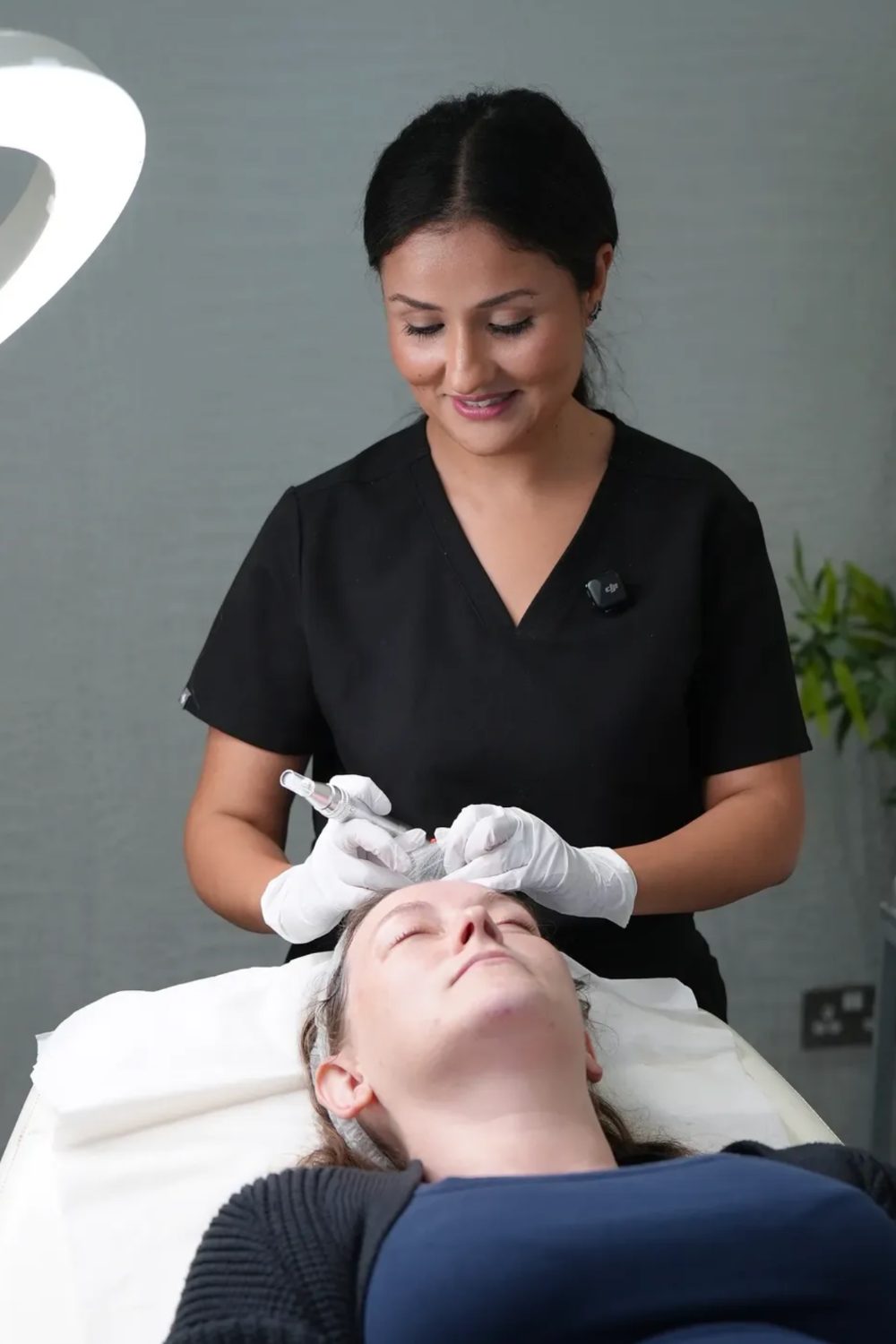
At your skin consultation, a doctor looks at your eyes in different light and positions to tell hollowing, pigmentation, visible blood vessels and puffiness apart. Aura 3D skin analysis helps us map texture and contour.
We also ask about allergies, eczema, sleep and general health. If you are also unusually tired or pale, a blood test to check for iron deficiency or other causes can be arranged through our private GP service, all on the same medical record.
Treatment Options for Under-eye Hollows and Dark Circles
Your plan depends on the cause we find, and often combines treatments in stages.
Injections that aim to improve the quality and thickness of thin under-eye skin, which may soften crepey texture and a bluish tint. The evidence is still developing and results are gradual.
An injectable combination of amino acids and hyaluronic acid used to improve skin quality and fine lines under the eyes. It does not fill deep hollows.
Tear trough filler can soften a true hollow, but it needs careful assessment and is not right for everyone. It can make puffiness or eye bags look worse, so we often advise against it.
A hyaluronic acid filler with a small amount of calcium hydroxyapatite, a biostimulator, used in the cheek and mid-face. For some people, combining filler and a biostimulator restores support beneath the eyes and improves skin quality together.
Platelet-rich plasma prepared from your own blood and placed into the under-eye skin to support repair and skin quality. Results vary and build gradually over a course.
Laser can improve skin quality, texture and some pigmentation around the eyes. Which laser suits you, such as LaserMe or UltraClear, depends on your skin and the cause, and is decided at your assessment.
Fine needling at a shallow depth to encourage collagen in thin under-eye skin, which may soften fine lines and crepey texture over a course.
Carefully chosen, gentle peels can help pigmentation and skin texture around the eyes. The skin here is delicate, so the peel and its strength are chosen by a doctor.
Products chosen for your skin, with prescription creams where appropriate after consultation, can help pigmentation and skin quality over several months.
Treating hay fever or eczema, not rubbing your eyes, regular sleep and daily sunscreen with sunglasses all help.
What to Expect
What to expect depends on the treatment chosen, the settings used and the outcomes you agree with your doctor in your plan.
Skin-quality injections usually involve a short course, with small bumps, redness or bruising for a few days. Changes build over weeks. Filler shows once swelling settles, though bruising under the eyes can take a week or two to fade. Skincare for pigmentation usually takes a few months.
Results vary and maintenance is usually needed. Genetic dark circles often improve only partly, and we will be honest about that.
How We Approach Under-eye Hollows and Dark Circles at Aarva
Every patient sees a doctor first. The skin here is delicate and the anatomy is complex, so we take time to find the cause. If allergies, eczema or a blood result are part of the picture, we look at those too, rather than covering the problem up.
You leave with a written treatment plan with clear pricing, and you do not have to book anything on the day. If filler or another treatment is unlikely to help your eyes, we will tell you.
When to See a Doctor Sooner
See your GP if you have swollen, red or pulled-back eyelids, eyes that look like they are bulging, gritty eyes or double vision, as these can be signs of thyroid eye disease. Also see your GP if puffiness is new and persistent, or swelling affects only one eye. Get urgent help from 111 if the skin around one eye becomes painful, red and swollen, especially with a fever. Call 999 or go to A&E if you have sudden changes in your vision.
This list is not exhaustive. If you are not sure about something, see a doctor.
Questions Patients Ask About Under-eye Hollows and Dark Circles
Cannot see your question? Our doctors are happy to talk it through at your consultation.
It depends on the cause, and it usually takes a combination of treatments rather than one. Pigmentation responds to skincare and peels, thin skin to treatments that improve skin quality, and a true hollow may respond to filler. A doctor can tell you which apply to you.
It can help a true hollow in the right person, but it is not suitable for everyone. If you have puffiness or eye bags, filler can make them look worse.
Sometimes. Allergies and eczema are common causes, and if you also feel very tired or look pale, a blood test can check for problems such as iron deficiency.
The price depends on your plan and how many sessions you need. We confirm it in writing before any treatment starts.
True eye bags caused by fat pushing forward usually respond poorly to non-surgical treatment. We will tell you honestly if a surgical opinion would suit you better.
Why Patients Choose Aarva
Doctor-led from the first appointment
Every consultation is with a doctor, and every plan is written by a practising GP.
GPs still in practice
Our doctors, Dr Saptarshi Saha, Dr Purti Choudhary and Dr Shivani Malhotra, are GMC-registered GPs who still work in general practice.
One medical record
GP, skin and women’s health care sit on one record, so nothing gets lost between appointments.
It starts with a consultation
A doctor assesses you properly, explains your options and gives you a written treatment plan with clear pricing, so every step that follows is the right one.
Come to Us With a Problem, Not a Treatment
To have a doctor look at your under-eye area, book a consultation or use Find your starting point.
Related conditions: Dehydrated, tired-looking skin · Volume loss · Melasma · Acne and breakouts
Related treatments: PRP
This page is general information and does not replace a consultation with a doctor.