

Home › Conditions › Fine lines and wrinkles
Fine lines and wrinkles
Fine lines and wrinkles are a normal part of skin ageing, made deeper by sun damage, smoking and repeated facial expressions. They can usually be softened, though not erased, with the right treatment and daily sun protection. The first step at Aarva is a doctor working out which kind of lines you have, because that decides what is likely to help.
Understanding Fine Lines and Wrinkles
Fine lines and wrinkles form as the skin loses collagen, elastin and moisture over time. They often show first as crow’s feet, forehead lines or frown lines. Some appear only when you move your face; others stay visible at rest and tend to be deeper.
Wrinkle treatment works better when it matches the type of line, so we start with a medical assessment. Our practice is in Sutton Coldfield, a short drive from central Birmingham, and this care sits within our medical-grade skin service, led by practising NHS GPs.
What Causes Fine Lines and Wrinkles?
Skin ageing comes partly from time and partly from the environment. Sun damage is the biggest factor you can control.
- Natural loss of collagen and elastin, which thins the skin
- Ultraviolet (UV) light, which breaks down collagen and causes much of visible skin ageing
- Smoking, which speeds up collagen loss
- Repeated muscle movement, such as frowning, squinting or raising your eyebrows
- The fall in oestrogen around the menopause, which can leave skin drier and thinner
- Dry skin, which makes fine lines around the eyes look more obvious
How We Assess Fine Lines and Wrinkles at Aarva
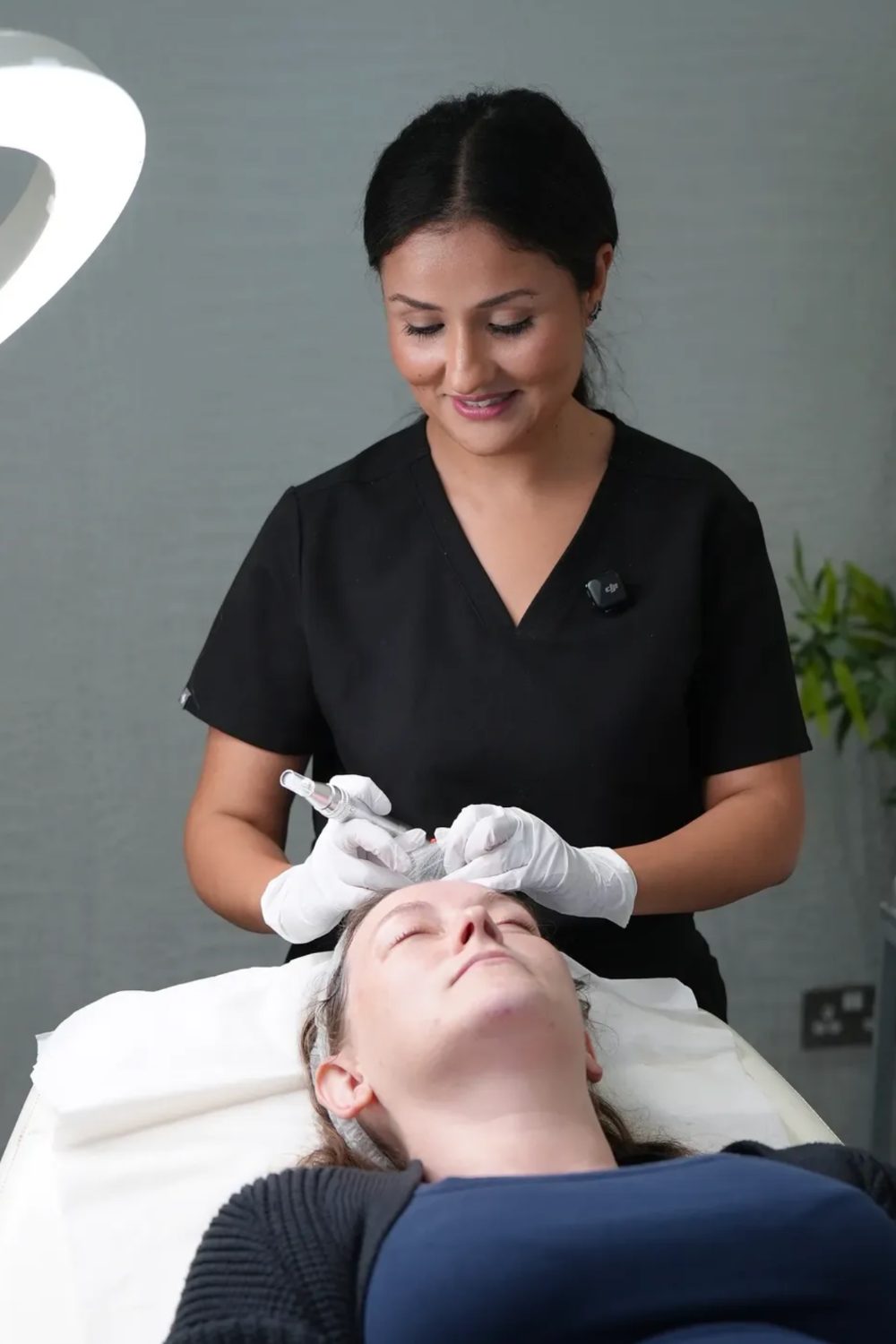
At your skin consultation, a doctor looks at your lines at rest and in movement. We ask about sun exposure, skincare, your health and medicines, and check whether any treatment would be unsuitable.
We use Aura 3D skin analysis to map texture, pigmentation and line depth. This helps separate lines caused by movement from those caused by thinning skin or sun damage, which respond to different treatments.
Treatment Options for Fine Lines and Wrinkles
Your plan depends on your assessment and often combines treatments in stages.
A prescription-only treatment that relaxes the muscles behind frown lines, forehead lines and crow’s feet, so lines caused by movement soften. It is only considered after a face-to-face consultation with a doctor.
A laser treatment aimed at texture, tone and fine lines, with minimal downtime and suitable for all skin types. It improves skin quality rather than deep folds.
Hyaluronic acid injections that spread under the skin to improve hydration and fine crepey lines. It does not relax muscles or fill deep creases.
Injections that aim to support skin repair and quality, often used for fine lines around the eyes. The evidence is still developing, so we set realistic expectations.
Controlled micro-injuries that prompt new collagen, gradually improving fine lines and texture over a course.
A resurfacing laser that renews the skin surface and stimulates collagen, used for deeper lines, texture and sun damage. The depth is set for your skin, and recovery ranges from a day or two to about a week.
Platelet-rich plasma prepared from your own blood and placed into the skin to support repair and skin quality. Results vary from person to person and build over a course.
Daily broad-spectrum sunscreen, not smoking and a good moisturiser matter more over the years than any single treatment. Where appropriate, we may suggest prescription creams after consultation.
What to Expect
What to expect depends on the treatment chosen, the settings used and the outcomes you agree with your doctor in your plan.
Most plans involve more than one visit. Muscle-relaxing injections usually take a few days to two weeks to show. Skin boosters, polynucleotides, microneedling and laser work more gradually, over weeks to months. Redness, swelling or small bruises for a few days are common.
Skin keeps ageing, so most people come back for maintenance. Anti-wrinkle injections, for example, usually wear off after around three to four months.
How We Approach Fine Lines and Wrinkles at Aarva
Lines have different causes, so we look at why yours are forming and treat that, rather than chasing each line. If menopause seems to play a part, our women’s health team can help, on the same medical record.
We give you a written treatment plan to take away, with a clear pricing structure. If a treatment is unlikely to help you, or you simply do not need one, we will tell you.
When to See a Doctor Sooner
See your GP if you notice a new or changing mole, a spot that bleeds, crusts or does not heal within a few weeks, or a patch of rough, scaly skin that keeps coming back; these can be signs of sun damage that needs checking. If you have a sudden droop on one side of your face, call 999.
This list is not exhaustive. If you are not sure about something, see a doctor.
Questions Patients Ask About Fine Lines and Wrinkles
Cannot see your question? Our doctors are happy to talk it through at your consultation.
It depends on the type of line. Lines caused by movement respond to muscle-relaxing treatment, while fine lines from sun damage or thinning skin respond better to treatments that improve skin quality. A doctor can tell you which applies to you.
Crow’s feet can be softened with laser, microneedling, skin boosters and good skincare, although results for lines caused by squinting are usually more modest without muscle-relaxing treatment. Daily sunscreen and sunglasses help prevent them deepening.
There is no set age. Sun protection is worth starting at any age, and treatment is a personal choice once lines bother you. We will tell you honestly if you do not need anything yet.
The price depends on your plan, which treatments are involved and how many sessions you need. We confirm it in writing before any treatment starts.
Yes, over time. Skin keeps ageing, so most treatments need maintenance, and how long results last varies from person to person.
Why Patients Choose Aarva
Doctor-led from the first appointment
Every consultation is with a doctor, and every plan is written by a practising GP.
GPs still in practice
Our doctors, Dr Saptarshi Saha, Dr Purti Choudhary and Dr Shivani Malhotra, are GMC-registered GPs who still work in general practice.
One medical record
GP, skin and women’s health care sit on one record, so nothing gets lost between appointments.
It starts with a consultation
A doctor assesses you properly, explains your options and gives you a written treatment plan with clear pricing, so every step that follows is the right one.
Come to Us With a Problem, Not a Treatment
To have a doctor look at your skin, book a consultation or use Find your starting point.
Related conditions: Neck lines and crepey neck · Loose skin, stretch marks and scarring · Hair thinning and hair loss · Dehydrated, tired-looking skin
Related treatments: Sunekos · UltraClear Laser
This page is general information and does not replace a consultation with a doctor.